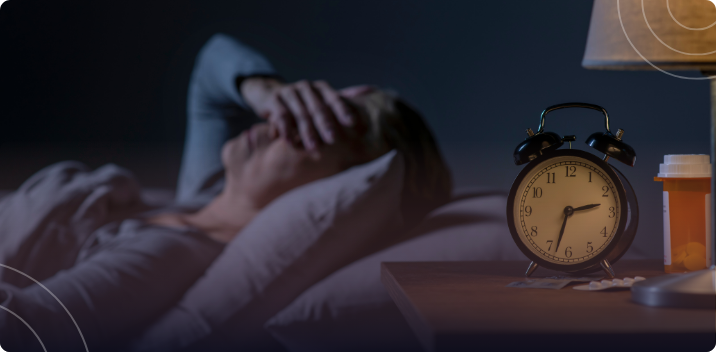
Millions of adults struggle with persistent insomnia and disrupted sleep cycles, facing exhaustion, mental fog, and diminished daily performance. About one in three adults in the United States does not get enough rest or sleep, and that shortfall is linked to everything from poor focus to heart disease. When conventional solutions like improved sleep habits and pharmaceutical interventions fail to deliver sustainable results, neurofeedback therapy provides a drug-free alternative that targets the underlying issue: irregular brain wave patterns disrupting your sleep.
Our Pasadena practice specializes in scientifically validated neurofeedback techniques and neuroscience-based protocols to help patients rewire the brain activity preventing restorative sleep. Patients experiencing insomnia, interrupted sleep, trouble initiating sleep, and repeated nighttime awakenings have pursued relief through customized brain training built for lasting insomnia relief, designed to quiet hyperactive neural networks and restore normal sleep cycles.
Why does your brain control whether you sleep well?
Sleep is governed by your brain, not just your body. Quality rest depends on precise coordination across many brain regions and specific brainwave frequencies cycling in the right order. When that orchestration breaks down, even an ideal bedroom and a full night of opportunity will not produce restful sleep, which is exactly why so many people lie awake exhausted.
Sleep functions as far more than a simple power-down mechanism for your mind. To grasp how neurofeedback enhances sleep quality, picture your brain as a sophisticated 19-room estate. Your sleep regulation center must coordinate effectively with your emotional control areas, stress management zone, and focus networks to enable peaceful rest. Each stage of sleep carries its own electrical signature, shifting from the lighter frequencies of early non-REM into the deep, slow waves that do the real restorative work.
For individuals with persistent insomnia, specific areas of this neural estate operate on dysfunctional communication frequencies. The stress management zone may broadcast unnecessarily intense signals despite no actual danger. The decision-making headquarters may resist "shutting down" at night, perpetuating racing thoughts. These communication failures manifest as distinct brainwave signatures on a qEEG brain analysis. Insomnia sufferers frequently exhibit elevated beta wave patterns when they should be generating more alpha and theta frequencies.
What is neurofeedback therapy for sleep?
Neurofeedback therapy, also called brain training, is a safe, non-invasive method that converts your brainwave patterns into immediate feedback. Through focused exercises, it guides your brain to recognize and regulate its own activity levels, coaching hyperactive zones to settle and underperforming regions to engage. It is self-regulation learning, not medication.
Our practice has developed Neurofeedback 3.0, an integrated multi-modal training methodology that merges the strongest elements from every available technique and technology. Rather than depending on isolated methods, Neurofeedback 3.0 strategically blends multiple assessment approaches, including artificial-intelligence-driven analysis, neural network connectivity evaluation, comparison against normative databases, and symptom monitoring, creating a comprehensive understanding of each patient's distinctive brain characteristics. We then deliberately choose from more than 20 neurofeedback modalities to craft genuinely individualized treatment protocols.
Non-invasive sensors positioned on your scalp record electrical brain activity through electroencephalography (EEG). These sensors transmit no signals toward the brain; they simply monitor existing activity. While you view a program, your brain receives visual rewards when it generates the relaxed, harmonious patterns linked to calmness and optimal sleep preparation. This instant feedback that strengthens your brain's own self-regulation helps you learn the skill directly. Your brain starts identifying what a peaceful, sleep-prepared state feels like and develops the ability to reach it on its own.
Does neurofeedback actually help with insomnia?
Research is genuinely encouraging while still maturing. A published review of neurofeedback for insomnia found that the studies examined consistently reported clear improvements in subjective sleep, with the most common approach training sensorimotor rhythm activity to ease sleep onset. Researchers also note the need for larger, more rigorous trials, so we frame brain training as a credible drug-free option rather than a guaranteed cure.
This matters because insomnia is widespread and stubborn. The condition is defined as difficulty falling asleep, staying asleep, or both despite adequate opportunity for rest, paired with real daytime consequences. By addressing the brainwave dysregulation underneath those symptoms rather than only sedating the system, neurofeedback aims at the mechanism instead of masking it.
What happens during your sleep training sessions?
A standard Neurofeedback 3.0 session runs 15 to 30 minutes. Our highly efficient neurofeedback variations demand briefer sessions than less effective training approaches, optimizing your outcomes in minimum time. At our Pasadena location, you relax in zero-gravity recliners while your brain activity determines the clarity of your preferred programming displayed on 70-inch televisions.
Before starting any training regimen, we generate your brain map through our 3D qEEG brain mapping technology. A brain map delivers a detailed blueprint of your brain's "architecture" and reveals how each distinct area operates. After completing your brain map analysis, we discuss the findings with you either face-to-face or via Zoom consultation. We generally begin patients on a four-month training program structured to enhance sleep quality and length.
Many patients in the Pasadena region start observing preliminary sleep improvements during their initial sessions. These early changes may involve falling asleep 15 to 20 minutes quicker, encountering fewer mid-sleep disruptions, or awakening feeling moderately more energized. As training progresses, these enhancements generally become more substantial and reliable. Through our visual feedback mechanism, these neural networks master communicating on more balanced frequency channels, establishing new neural pathways that yield enduring improvements. Effective neurofeedback cases deliver relief and benefits that persist for remarkably extended periods, and some clients have even reported indefinite lasting benefits.
Can you do neurofeedback for sleep from home?
Yes. We provide remote programs that let you receive treatment from any location nationwide, and the option is especially well suited to sleep. Almost half of our patients utilize remote neurofeedback, and that percentage continues to grow as the technology improves.
For patients living an hour or more from our Pasadena facility, we supply in-home neurofeedback training using our exclusive hardware and software systems. The remote option proves particularly effective for neurofeedback in Los Angeles and far beyond because patients can run sessions during the evening hours when they are naturally preparing for rest, training the brain in the exact context where better sleep needs to happen.
Is neurofeedback a safe alternative to sleep medication?
Neurofeedback training is non-invasive, eliminating concerns about surgical procedures or additional pharmaceutical interventions to obtain the support you need. This positions it as an attractive choice for individuals seeking to avoid the side effects and dependency risks connected with sleep medications, while still addressing the root brainwave imbalance.
Sleep deprivation is not a minor inconvenience. Chronic shortfalls are tied to serious effects on the body and brain, including impaired focus, mood disturbance, and elevated risk for chronic disease, which is why finding a sustainable solution matters so much. We regard every patient as a distinct individual with a unique narrative, set of obstacles, and goals. We employ scientifically validated techniques and consult with a team of PhD scientific advisors to ensure we consistently deliver the most scientifically precise support available.
If you are ready to address the sleep challenges limiting your life, our team of highly rated trainers is here to help you restructure your sleep patterns and reclaim your days through evidence-based brain training.
Frequently Asked Questions
How long before neurofeedback improves my sleep?
Many patients notice early changes within their first several sessions, such as falling asleep 15 to 20 minutes faster or waking less during the night. These shifts tend to deepen and stabilize over a typical four-month program as new neural pathways take hold.
Is neurofeedback safe and does it hurt?
Neurofeedback is non-invasive and painless. Sensors on your scalp only read your existing brain activity through EEG; they never send any signal into the brain. You simply relax and watch a program while your brain earns visual rewards for calmer patterns.
Can neurofeedback replace my sleep medication?
Neurofeedback is a drug-free option that targets the brainwave dysregulation behind poor sleep rather than sedating you. Many people use it to reduce reliance on sleep aids, but you should never change or stop any prescription without first consulting the doctor who prescribed it.
How is a qEEG brain map used for sleep training?
A 3D qEEG brain map shows how each region of your brain is functioning and where activity is out of balance, such as excess beta when alpha and theta should dominate. We use that blueprint to design a training protocol aimed precisely at the patterns disrupting your rest.
Does neurofeedback for insomnia work remotely?
Yes. Nearly half of our patients train remotely using our hardware and software from home, and the format suits sleep especially well. Running sessions in the evening lets you train the brain at the natural time it should be winding down for rest.
Ready to take the next step?
Talk with the Vital Brain Health team about a Neurofeedback plan built around your brain and your goals.