
Neurofeedback for Concussion & TBI in Adults, Los Angeles & Pasadena
A concussion is a traumatic brain injury and requires immediate medical attention. Concussions can cause memory problems, issues with motor skills, and affect the nervous system in other serious ways. Many people take significant time to recover before they can begin returning to normal activities. If you're concerned about your well-being after a concussion, you need an assessment from a specialist in neuroscience.
At Vital Brain Health, we support clients with a comprehensive method that helps identify and heal concussions while improving the overall well-being of our clients.
At a Glance
Neurofeedback at Vital Brain Health is a drug-free, non-invasive way to support adults recovering from concussion, traumatic brain injury (TBI), and lingering post-concussion syndrome. We start with qEEG brain mapping to see how your brain is functioning, then use real-time feedback to help different brain regions communicate, supporting focus, memory, and overall recovery.
What is Concussion?
A concussion is a severe TBI that affects the brain's functions and can lead to headaches, dizziness, and confusion. Sports concussions are one of the most common forms of a concussion. The symptoms of a concussion will usually go away after a few days to a month of rest. Sometimes, though, the symptoms can last longer.
At Vital Brain Health, we are dedicated to relieving concussions in our clients with our excellent and innovative techniques. We avoid unnecessary medications and surgeries with our approach while still providing optimal healing.
If you are presenting concerns related to a concussion, schedule an appointment with Vital Brain Health. Our holistic approach can meet your unique needs and restore your health.
Concussion, traumatic brain injury (TBI), and post-concussion syndrome are closely related. A concussion is a mild form of TBI, while moderate and severe TBIs involve greater injury to the brain. When concussion symptoms such as headaches, brain fog, or difficulty concentrating linger for weeks or months, the condition is often described as post-concussion syndrome. Because all three involve disrupted brain function, the same qEEG-guided, drug-free neurofeedback approach we use for concussion can also support adults managing TBI and post-concussion syndrome, helping the brain retrain healthier patterns of communication.
Common Causes of Concussions
Understanding the potential causes of concussions can help you prevent them in the future. Concussions are often the result of one of a variety of factors:
Sports Injuries
Concussions are a common form of sports injury.
Head Impacts
Severe impacts to the head can cause concussions and other forms of traumatic brain injuries.
Key takeaway
If you are recovering from a concussion, you do not have to rely on medication alone. Vital Brain Health uses qEEG-guided, drug-free neurofeedback to help your brain heal and get you back to normal activities.
What symptoms are associated with concussions?
Symptoms of concussions can vary in type and severity. Concussion symptoms that benefit from an evaluation at Vital Brain Health include:
Recovering from a head injury raises a lot of questions, so our clinicians put the full picture in one place in our complete guide to neurofeedback for concussion and TBI recovery.
And if it has been weeks or months since your injury and you still do not feel like yourself, we also explain why persistent concussion symptoms need more than rest, and what your next step can look like.
What are the Support Options for Concussions?
Vital Brain Health offers different types of support, each serving a different purpose. Some of the support you may be recommended include:
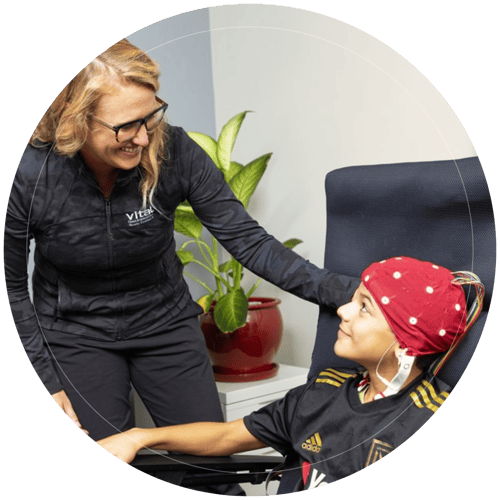
Neurofeedback
Neurofeedback utilizes advanced brain training to optimize your brain’s natural function using real-time feedback. This can help the different parts of your brain communicate more effectively, which in turn improves focus, emotional regulation, and cognitive performance. Best of all, no part of this process requires medication.
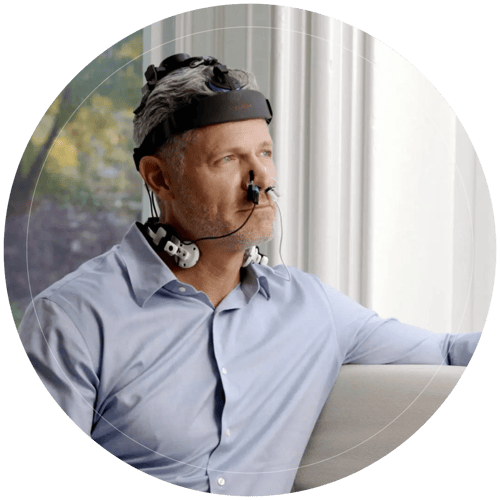
Photobiomodulation
Photobiomodulation uses low-level lasers to stimulate the brain and improve memory, cognitive function, and concentration.
Frequently Asked Questions
Neurofeedback represents the evolution of brain optimization: a scientifically-validated method that harnesses your brain's natural neuroplasticity to improve cognitive function. At Vital Brain Health, we've pioneered what we call Neurofeedback 3.0, representing an integrated multi-modal training approach that combines the best elements from all available methods and technologies.
Neurofeedback operates on the principle of operant conditioning combined with neuroplasticity: your brain's remarkable ability to reorganize and optimize itself throughout life. At Vital Brain Health, our Neurofeedback 3.0 protocols represent the most sophisticated application of this science, an integrated multi-modal approach that combines traditional methods with cutting-edge technologies including AI-based analysis, machine learning algorithms, network connectivity analysis, and adaptive protocols that evolve based on your individual progress and response patterns
Vital Brain Health stands apart as Los Angeles' premier evidence-based neurofeedback center through our Neurofeedback 3.0 approach, an integrated multi-modal training system that represents a comprehensive meta-strategy pulling from many forms of analysis and neurofeedback tools. While other practices use basic single-method training, we strategically combine multiple analysis methods including AI-based analysis, network connectivity assessment, normative database comparisons, and symptom tracking to create the most personalized and effective training for each individual. When standard treatments and budget neurofeedback options have failed, discerning families and individuals choose us for results-driven, scientifically-validated training.
Yes. Because a concussion is a mild traumatic brain injury (TBI), and post-concussion syndrome describes concussion symptoms that linger for weeks or months, all three conditions involve disrupted patterns of brain activity. Our qEEG-guided, drug-free neurofeedback can support adults recovering from TBI and post-concussion syndrome by helping different brain regions communicate more effectively, which may ease lingering symptoms such as brain fog, headaches, fatigue, and trouble concentrating. We begin every program with qEEG brain mapping so your training is tailored to how your brain is actually functioning. Neurofeedback complements, and does not replace, the care of your physician, so any TBI should also be evaluated by a medical provider.
A traumatic brain injury (TBI) is any injury that disrupts how the brain works, and it ranges from mild to severe. A concussion is the most common, mildest form of TBI. Post-concussion syndrome is the term used when concussion symptoms, such as headaches, dizziness, brain fog, or difficulty concentrating, persist longer than expected after the initial injury. Because all three share the same underlying disruption to brain function, the same neurofeedback approach we use for concussion can also support adults managing TBI and post-concussion syndrome.
There is no one-size-fits-all number, because every training plan at Vital Brain Health is individualized from your qEEG brain map. That said, many training plans run in the range of 30 to 40 sessions over several months. Your exact plan comes from the initial evaluation, where we review your brain map, your symptoms, and your goals, then lay out a schedule that fits your life.
Yes. Vital Brain Health runs nationwide remote programs for adults recovering from concussion. We send home training equipment to your door, and a clinician oversees your training and adjusts your protocol as your brain responds, so you can train consistently without traveling to our Pasadena office.
Before any training begins, qEEG brain mapping shows us which networks in your brain are over-active or under-active after your injury. That map becomes the blueprint for your plan, so the training targets this brain, your brain, rather than a generic concussion protocol.
Enriquez-Geppert, Stefanie, et al. "The Morphology of Midcingulate Cortex Predicts Frontal-Midline Theta Neurofeedback Success." Frontiers in Human Neuroscience, vol. 7, 2013, pp. 1-10. Othmer, Siegfried, et al. "Implementation of Real-Time Digital Filtering in Neurofeedback." Journal of Neurotherapy, vol. 17, no. 1, 2013, pp. 5-18. Escolano, Carlos, et al. "EEG-Based Upper-Alpha Neurofeedback Training Improves Working Memory Performance." Proceedings of the Annual International Conference of the IEEE Engineering in Medicine and Biology Society, 2014, pp. 2327-2330. Marzbani, Hamed, et al. "Neurofeedback: A Comprehensive Review on System Design, Methodology and Clinical Applications." Basic and Clinical Neuroscience, vol. 7, no. 2, 2016, pp. 143-158. Bitbrain Technologies. "What is QEEG Brain Mapping & How to Interpret It."Bitbrain Blog, 30 Apr. 2025, www.bitbrain.com/blog/qeeg-brain-mapping. Thatcher, Robert W. "Validity and Reliability of Quantitative Electroencephalography." Journal of Neurotherapy, vol. 14, no. 2, 2010, pp. 122-152. Thatcher, Robert W., et al. "Quantitative EEG Analysis Methods and Clinical Applications." Artech House, 2009. Putman, Joel A., et al. "TOVA Results Following Interhemispheric Bipolar EEG Training." Journal of Neurotherapy, vol. 9, no. 1, 2005, pp. 37-52. Micoulaud-Franchi, Jean-Arthur, et al. "EEG Neurofeedback for Anxiety Disorders and Post-Traumatic Stress Disorders: A Blueprint for a Promising Brain-Based Therapy." Current Psychiatry Reports, vol. 23, no. 12, 2021, pp. 1-15.

Get the Neurofeedback You Need
Whether you're in the Los Angeles area or elsewhere in the United States, we can provide you the services you need.

Reach Out To Us
Professional Certifications