


SERVICES
3D qEEG Brain Mapping
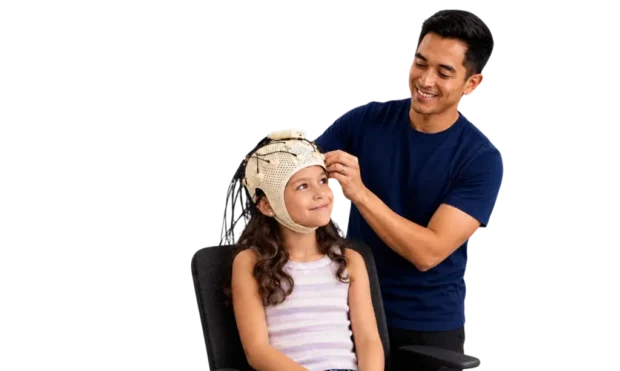
3D qEEG brain mapping is the first step in creating a personalized brain training plan. By measuring your unique brainwave patterns, we can identify areas that may be contributing to challenges such as brain fog, attention issues, and learning difficulties. These insights help guide our customized approach for supporting stronger brain function for each unique client.
What Is 3D qEEG Brain Mapping?
How 3D qEEG Brain Mapping Works
3D qEEG Brain Mapping provides a comprehensive analysis of the brain’s electrical activity, going beyond the flat, limited snapshot of traditional 2D brain maps. Instead of only showing surface-level differences, 3D qEEG Brain Mapping helps our team identify patterns in how different brain regions are regulating, communicating, and either over- or under-activating. This layered view supports a more functional understanding of brain activity and how individual networks may be contributing to symptoms or challenges.
Advantages of 3D qEEG Brain Mapping
Accurate Support
3D qEEG brain mapping can help identify a diverse range of neurological and behavioral conditions, allowing for the development of more precise training programs.

Personalized Support Plans
3D qEEG brain mapping helps pinpoint where in the brain a condition may be impacting function, enabling more targeted and personalized neurofeedback training programs.
Conditions 3D qEEG Brain
Mapping Can Help
ADHD
ADHD can often be identified through a qEEG brain map. From there, we develop a neurofeedback program to help you find lasting results across improved attention, focus, and memory.
Anxiety
Anxiety is a condition commonly spotted during qEEG brain mapping. Our services can help identify patterns and retrain your brain toward healthier, more regulated responses.
Depression
Through qEEG brain mapping, we can identify brain activity patterns associated with depression and use that insight to develop a neurofeedback plan.
Learning Disorders
qEEG brain mapping can help highlight patterns associated with learning disorders, allowing us to build a targeted neurofeedback training program to support cognitive performance.
Mild Cognitive Decline
Brain fog and other forms of cognitive decline often appear on a qEEG brain map, helping us to guide supportive neurofeedback strategies for improved clarity and function.
OCD
Understanding the brain activity patterns associated with OCD is an important part of how we develop neurofeedback-based support tailored to each client.
Why Choose Vital Brain Health?
Each client comes to us with unique challenges, and we take the time to understand the individual and create a path forward just for them. Guided by detailed brain mapping, personalized training plans, and science-backed methods developed with the support of our PhD scientific advisors, we help clients uncover what’s possible and gain greater access to the strengths already within them.