


SERVICES
Neurofeedback
Neurofeedback helps clients improve the brain patterns that may be contributing to challenges such as emotional dysregulation and cognitive performance issues. Through real-time feedback and personalized training, the brain learns more effective ways of functioning, helping clients strengthen self-regulation, reduce everyday struggles, and gain greater access to their full potential.
What Is Neurofeedback?
How Neurofeedback Works
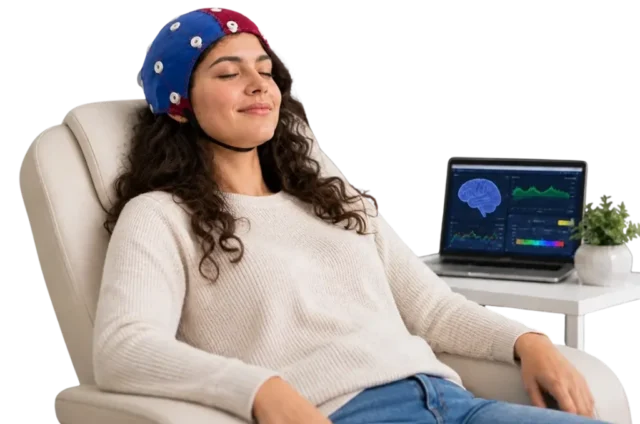
Neurofeedback is a form of brain training. Just as your muscles become stronger through exercise, the brain can learn healthier patterns through repetition and feedback.
During a session with us, a patient simply watches their favorite show while sensors monitor their brain activity in real time. As the brain shifts into healthier patterns, the screen becomes clearer. When the brain drifts into less helpful patterns, the screen could dim or the volume may soften. Over time, the brain learns, “Do more of this. Do less of that.”
Patients quickly settle into the experience as an activity that feels easy, natural, and relaxing. All the while, their brain is practicing regulation.
A Good Way to Think of Neurofeedback
Think of the brain as a 19-room mansion, where each room plays a different role in things like emotion, focus, and memory. These rooms constantly communicate through a kind of intercom network.
When the rooms work well together, the system runs smoothly. When the rooms have trouble functioning or communicating with other rooms, it can throw off the system. Neurofeedback uses a brain map to identify which rooms need support, then helps train those areas through real-time feedback so the brain learns to regulate itself more effectively over time.
Advantages of Neurofeedback

Long Lasting
Neurofeedback can deliver long-term relief, with many clients reporting benefits that continue for incredibly extended periods—sometimes even indefinitely.
Non-Invasive
Neurofeedback is a non-invasive process, so clients don’t have to worry about going through surgery to get the support they need.
Conditions Neurofeedback
Can Help

ADHD
Neurofeedback can help you improve your focus and memory by reducing inattentive and hyperactive/impulsive symptoms.
Anxiety
Neurofeedback can help you manage your anxiety by training the brain to handle anxiety more effectively.
Depression
Neurofeedback can help you create better brain activity to overcome depression through targeted training and neuromodulation.
OCD
Neurofeedback can be especially helpful for retraining compulsive patterns.
Why Choose Vital Brain Health?
Each client comes to us with unique challenges, and we take the time to understand the individual and create a path forward just for them. Guided by detailed brain mapping, personalized training plans, and science-backed methods developed with the support of our PhD scientific advisors, we help clients uncover what’s possible and gain greater access to the strengths already within them.