By the time October arrives, the initial enthusiasm of a new school year has faded. Homework loads increase, classroom structure tightens, and social expectations grow heavier across every grade level. For parents of children with ADHD or Executive Function Disorder, October often marks a sudden, exhausting spike in evening emotional outbursts, forgotten assignments, tearful arguments over simple morning routines, and intense pushback against basic everyday expectations.
If you are navigating this in your home right now, it is essential to realize that this shift is not a conscious choice, bad parenting, or willful refusal on the part of your child. What looks on the surface like behavioral resistance or refusal is usually a child’s central nervous system hitting an overwhelming physiological wall.
The Mechanism of October Executive Function Overload
Executive function acts as the brain’s management system, coordinating working memory, focused attention, task initiation, emotional regulation, organization, time management, and self-monitoring. Research published in the Annual Review of Psychology demonstrates that executive functions rely on interrelated cognitive controls that are particularly vulnerable to depletion under sustained mental demand.
In children with ADHD or neurodivergent profiles, these underlying neural networks operate under fundamentally different baseline parameters compared to neurotypical peers.
During September, novelty, adrenaline, clear teacher expectations, and structured routines help children temporarily compensate for these underlying neural differences.
By October, three major physiological factors converge to trigger a complete system overload:
- Accumulated Cognitive Fatigue: Maintaining intense, sustained attention for six to seven hours a day in a high-stimulation sensory environment drains neural energy reserves faster than overnight sleep can restore them.
- Emotional Tank Depletion: Suppressing physical restlessness, managing sensory processing inputs, and working twice as hard to sit still all day creates a cumulative pressure-cooker effect. As established in Barkley’s unifying theory of ADHD, deficits in behavioral inhibition directly impair emotional self-regulation. Home is the safest environment for a child to drop their guard, which results in severe after-school emotional outbursts over seemingly minor requests.
- Swamped Working Memory Capacity: As the academic term progresses, classroom instruction shifts from simple daily worksheets to complex, multi-step projects and independent study habits. This sudden increase quickly exceeds the working memory capacity of an already strained focus network.
Identifying Root Causes with 3D qEEG Brain Mapping
Instead of relying solely on subjective behavioral checklists or trial-and-error approaches, we examine what is physically happening within your child’s central nervous system.
Through 3D qEEG Brain Mapping, we conduct a completely painless, non-invasive scan to record real-time brainwave activity across the entire surface of the brain.
In children struggling with focus, impulse control, and executive function, these objective scans often reveal specific, measurable electrophysiological signatures published extensively in medical literature (such as this meta-analysis on EEG signatures in ADHD):
- Elevated Theta Activity: An overabundance of slow Theta brainwaves (typically associated with light sleep, daydreaming, or deep relaxation) in the frontal lobes during tasks requiring active focus.
- Deficit in Fast Beta Activity: A lack of fast Beta brainwaves, which are necessary for active problem-solving, cognitive processing, sustained attention, and working memory retrieval.
- High Theta/Beta Ratios: A high ratio between slow and fast brainwave activity (TBR). According to findings in Clinical EEG and Neuroscience, elevated TBR serves as a key electrophysiological index of altered cognitive processing during active tasks.
Identifying these precise brainwave signatures removes the guesswork. It shifts the entire family perspective away from viewing a child as “lazy” or “defiant” toward understanding the physical focus barriers they are working tirelessly to overcome.
Retraining Focus & Calm with Neurofeedback 3.0
Once we establish your child’s 3D brain map baseline, we do not simply offer coping strategies or compensation tactics to manage symptoms. We utilize targeted brain training to help the nervous system learn true self-regulation into healthier, more flexible states. Research indexed on PubMed shows that neurofeedback protocols targeting specific frequency bands can effectively train self-regulation mechanisms.
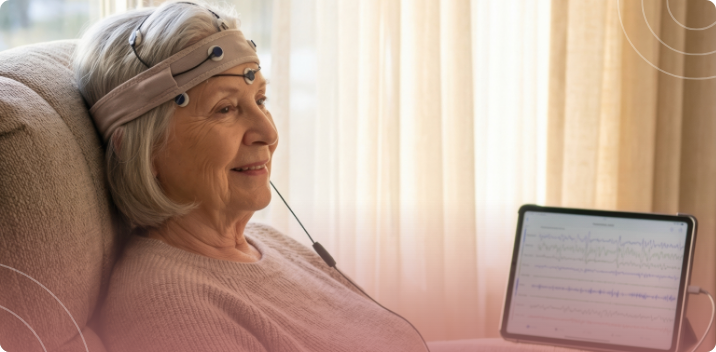
Through Neurofeedback 3.0, your child engages in customized training sessions where they watch a movie or engage with interactive visual content while their brainwave activity is continuously monitored in real time:
- Sensors Detect Brainwave Activity: Non-invasive sensors read current brainwave output throughout the entire session.
- Real-Time Visual Feedback: When your child’s brain naturally enters a balanced, focused state (increasing Beta, suppressing excess Theta), the screen plays smoothly and clearly.
- Conditioning Through Neuroplasticity: If focus drifts or anxiety spikes, the screen dims or pauses. Driven by the innate desire to keep watching, the brain quickly learns to alter its state to keep the video playing.
- Building Long-Term Neural Pathways: Through repetition and neuroplasticity, the brain strengthens these healthy focus and regulation pathways so your child can access them outside of training.
Accessible Care from the Comfort of Home
Families do not need to add frequent clinic visits, traffic, and waiting rooms to an already packed autumn schedule. Nearly 50% of our clients complete their personalized neurofeedback programs from home using our custom remote equipment and specialized protocols.
This drug-free, non-invasive approach provides your child with personalized support in their most comfortable environment. By addressing underlying brainwave patterns directly at the source, we help children build lasting focus, emotional resilience, and confidence that extends far beyond the classroom for years to come. Contact Vital Brain Health today!
References
Barkley, R. A. (1997). Behavioral inhibition, sustained attention, and executive functions: Constructing a unifying theory of ADHD. Psychological Bulletin, 121(1), 65–94. https://doi.org/10.1037/0033-2909.121.1.65 Cited by: 13555
Diamond, A. (2020). Executive functions. Handbook of Clinical Neurology, 225–240. https://doi.org/10.1016/b978-0-444-64150-2.00020-4 Cited by: 25274
Garcia Pimenta, M., Brown, T., Arns, M., & Enriquez-Geppert, S. (2021). Treatment Efficacy and Clinical Effectiveness of EEG Neurofeedback as a Personalized and Multimodal Treatment in ADHD: A Critical Review. Neuropsychiatric Disease and Treatment, 17, 637–648. https://doi.org/10.2147/ndt.s251547 Cited by: 89
Nuwer, M. R., Buchhalter, J., & Shepard, K. M. (2016). Quantitative EEG in attention-deficit/hyperactivity disorder. Neurology Clinical Practice, 6(6), 543–548. https://doi.org/10.1212/cpj.0000000000000308 Cited by: 32
Westwood, S. J., Aggensteiner, P.-M., Kaiser, A., et al. (2025). Neurofeedback for Attention-Deficit/Hyperactivity Disorder. JAMA Psychiatry, 82(2), 118. https://doi.org/10.1001/jamapsychiatry.2024.3702 Cited by: 58