Is neurofeedback safe?
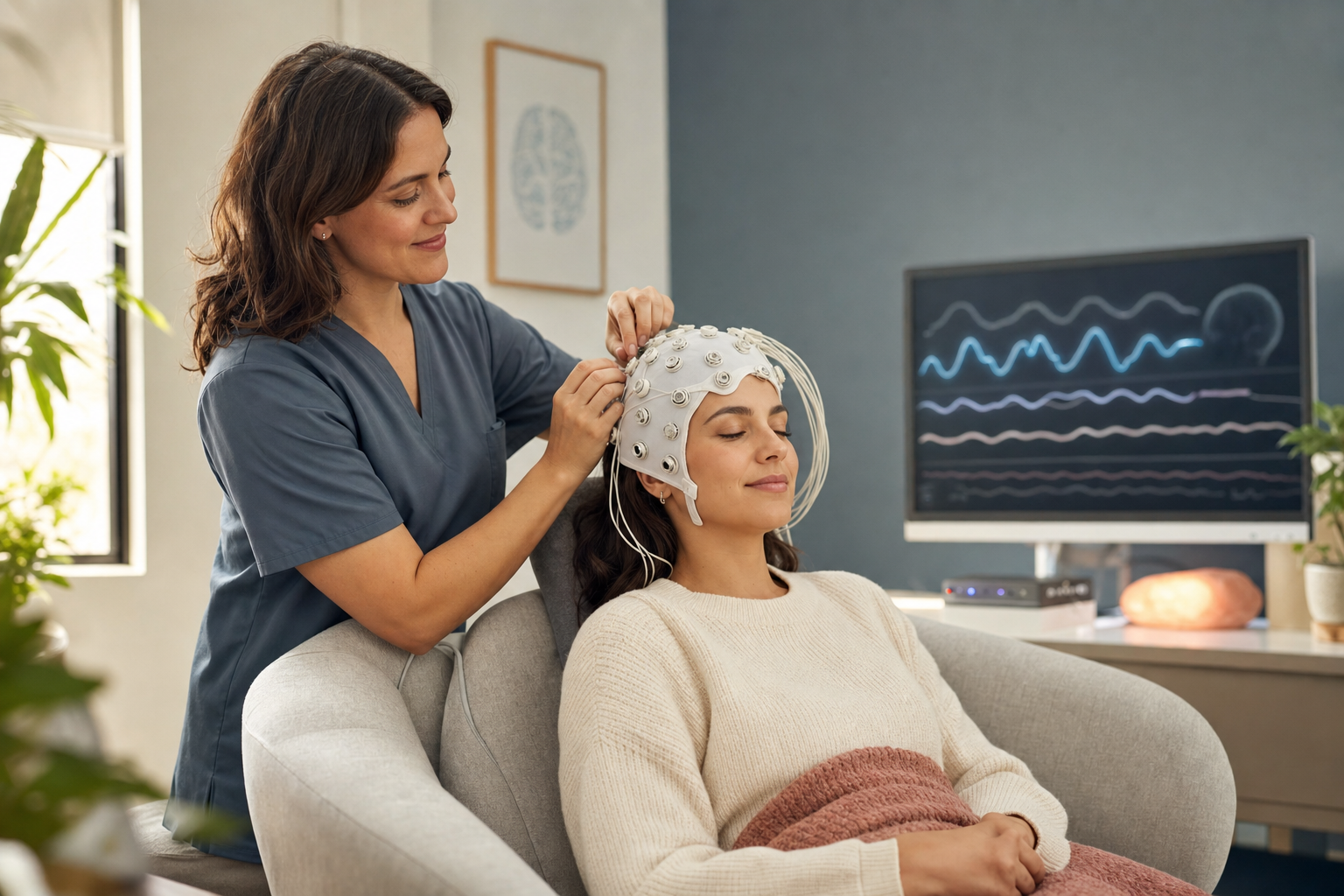
Neurofeedback is a non-invasive, drug-free form of brain training, and the research record supports its safety when it is delivered properly. A systematic review of neurofeedback studies found the interventions were well tolerated, with only a small minority of studies reporting any side effects at all. Nothing is put into the brain during a session: the sensors on the scalp only read your brain’s electrical activity, the same way a thermometer reads temperature. The “feedback” is simply what you see and hear on a screen.
That said, “safe” does not mean “nothing to think about.” Like any training process, neurofeedback can produce temporary effects, and quality of delivery matters. Here is the honest picture.
What side effects can neurofeedback cause?
The side effects reported in research are mostly mild and short-lived. A double-blind, sham-controlled study of neurofeedback side effects described them as transient, meaning they show up around training and fade on their own. In practice, the effects people most often describe include:
- Feeling tired or “worked out” mentally after a session, especially early in training
- A mild, short-lived headache
- Feeling briefly wired or restless after certain sessions
- Vivid dreams or temporary changes in sleep as the brain adjusts
Notably, research on neurofeedback for attention challenges has reported no significant neurofeedback-specific side effects across prior studies. Compare that to the side-effect lists that come with many medication options, and you can see why families exploring drug-free support often start here.
Why do some people say neurofeedback made them feel worse?
If you have searched this topic, you have probably run into alarming stories. Most trace back to one of three things, and all three are avoidable:
- Generic protocols. Training that is not matched to the person’s actual brain activity can push in the wrong direction, which is why serious clinics begin with a quantitative EEG assessment instead of guessing. Our article on what a qEEG brain map actually shows explains how mapping works.
- Overtraining. More is not better. Session length, frequency, and intensity should be calibrated and adjusted based on how you respond.
- Unqualified providers. Neurofeedback equipment can be purchased by anyone. Credentials, clinical oversight, and a real intake process are what separate professional care from a gadget experience.
The lesson is not that neurofeedback is risky. It is that the provider you choose matters more than the device.
How to choose a safe neurofeedback provider
Ask these questions before you commit, whether at our clinic or anywhere else:
- Do you start with a full qEEG brain map, and will you review it with me?
- Who designs and supervises the training protocol, and what are their credentials?
- How do you monitor progress and adjust the plan if something feels off?
- What happens if I notice new symptoms during training?
A trustworthy clinic will welcome every one of those questions.
How Vital Brain Health approaches safety
At Vital Brain Health in Pasadena, every client starts with a 3D qEEG brain map so training is matched to your brain’s actual patterns rather than a generic template. Programs are designed and supervised by a credentialed clinical team led by Dr. Giancarlo Licata, who holds a post-doctorate diplomate in quantitative electroencephalography, and your response is monitored session by session, including in our nationwide remote programs. If you have questions about your specific situation, including your health history, schedule an appointment and we will talk it through honestly.