If you are one of the countless Los Angeles adults lying awake at 2 AM, staring at the ceiling while your mind races through tomorrow's meetings, you already know that sleep disorders are more than just an inconvenience. They are affecting your work performance, your relationships, and your overall quality of life. What you may not know is that biofeedback training offers a non-invasive way to retrain your brain's responses to the stressors and patterns keeping you awake. Adults generally need seven or more hours of sleep a night to function well, and falling short of that, according to the CDC, takes a real toll over time.
Why Do Sleep Problems Develop in the Brain?
Sleep problems develop because the brain has learned specific patterns over time that interfere with its natural sleep cycles. Stress, irregular schedules, and constant stimulation train the brain to stay alert when it should be powering down. These are measurable patterns of brain activity, not character flaws, and that is exactly why they can be changed.
Think of your brain as a sophisticated control center with different rooms managing different functions. One room handles your stress responses, another manages your relaxation systems, and others control your body's natural sleep-wake rhythms. A brainstem network often described as the brain's arousal and sleep-wake control hub helps coordinate when you feel alert versus when you wind down. When these systems stop communicating effectively, or when certain brainwave frequencies become imbalanced, sleep problems emerge.
For many Los Angeles adults, the combination of high-stress careers, long commutes on the 405 and 101, late-night screen exposure, and constant connectivity creates a perfect storm for sleep disruption. Your brain learns to stay in high-alert mode even when it is time to rest. Insomnia is one of the most common sleep complaints there is, and the Sleep Foundation notes that up to two-thirds of people experience insomnia symptoms at some point, so if you are struggling, you are far from alone.
How Does Biofeedback Training Address Sleep Disorders?
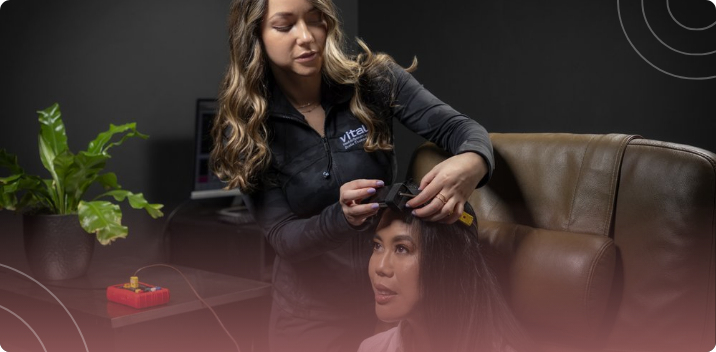
Biofeedback training addresses sleep disorders by giving you real-time information about your own body so you can learn to calm it on purpose. A trainer uses non-invasive monitoring equipment to track your brainwave patterns, heart rate, breathing, and muscle tension, letting you see exactly what happens inside you when you try to relax, then practice shifting those signals toward sleep.
The process is simple but powerful. You will learn to recognize the physical symptoms and mental patterns that signal your brain is in a state incompatible with sleep. More importantly, you will discover how to shift those patterns intentionally. This is not about willpower or trying harder to fall asleep. It is about teaching your brain's different rooms to communicate more effectively through their shared frequency channels. If you want a deeper look at the methodology, our overview of how biofeedback training works walks through the equipment and the session flow in plain language.
Biofeedback helps regulate your autonomic nervous system, teaching your body to shift from the stressed fight-or-flight state into the calm rest-and-process mode necessary for sleep. A closely related approach, neurofeedback for sleep and focus, works directly on retraining your brainwave patterns. If your qEEG brain mapping shows excess fast beta activity, training can encourage your brain to produce more of the slower alpha and theta frequencies associated with relaxation and the transition to sleep. Research reviewing neurofeedback as a tool for insomnia has reported consistent improvements in how well people feel they sleep, though scientists are still studying its objective effects, so we set realistic expectations from the start.
What Makes Los Angeles Sleep Problems Unique?
Los Angeles sleep problems are unique because the city's rhythm works against rest. Long commutes, demanding entertainment and tech schedules, and a culture of late-night connectivity keep the nervous system in overdrive, so many LA adults arrive home tense and find their brains will not switch off when the day finally ends.
The city's traffic patterns mean many adults spend one to two hours commuting, often arriving home stressed and physically tense. West LA and Santa Monica professionals frequently describe trying to wind down after high-pressure days, only to find their minds stuck in problem-solving mode. Stress is one of the most common triggers behind sleeplessness, and the Cleveland Clinic explains that when sleep difficulty lingers for three months or more it becomes chronic insomnia. Brain training options for insomnia relief acknowledge the real pressures of LA life while giving you concrete tools to manage their impact, so daily stressors stop hijacking your body's natural need for rest.
What Happens During the Biofeedback Process for Sleep?
The biofeedback process for sleep usually starts with a comprehensive qEEG brain mapping session. This non-invasive assessment measures your brain's electrical activity and creates a detailed picture of your brainwave patterns, showing exactly where your activity deviates from optimal sleep-supporting rhythms before any training begins.
Maybe your brain produces too much beta activity in the evening when it should be generating more alpha waves. Perhaps your stress-response centers activate too easily, flooding your system at the very hour your body should be winding down. The brain map reveals these specific patterns so your training can be personalized to your unique needs rather than following a one-size-fits-all script.
Your training program, typically structured as a four-month commitment, involves regular sessions where you practice controlling your brain's responses. You receive immediate feedback the moment your brain reaches the patterns associated with relaxation and sleep readiness. Over time, your brain learns to reach those states more easily and hold them longer. This kind of personalized brainwave assessment and training turns vague advice like "just relax" into a concrete, trackable skill.
What Can You Expect from Biofeedback for Sleep?
You can expect biofeedback for sleep to require consistent practice, with many adults noticing improvements within the first few weeks of training. You might fall asleep faster, wake less often during the night, or feel more rested in the morning as your brain gradually relearns how to settle.
Because biofeedback is training your brain to function differently, the benefits often continue long after you complete your program. Unlike sleep aids that only work while you are taking them, the neural pathways you develop through training tend to become self-sustaining, so your brain keeps its improved ability to regulate sleep-wake cycles. That distinction matters, because insomnia is defined by trouble falling asleep, staying asleep, or getting quality rest despite having the time and opportunity, as the NHLBI describes, and lasting change comes from addressing the underlying patterns rather than masking the symptoms.
How Do You Take the First Step?
You take the first step by scheduling an initial consultation and a comprehensive assessment, including qEEG brain mapping, to see exactly which patterns in your brain are interfering with healthy sleep. From there, you can make an informed decision about whether this approach fits your needs and goals.
If sleep problems are impacting your life, the goal is simple: retrain and restore your neurological and cognitive health so the restorative sleep your body needs becomes the norm again rather than the exception. A trainer can help you read your own brain map, set realistic milestones, and build the self-regulation skills that carry forward long after your sessions end.
Frequently Asked Questions
Is biofeedback for sleep safe and drug-free?
Yes. Biofeedback is non-invasive and does not involve medication. Sensors simply read signals your body already produces, such as brainwaves, heart rate, and breathing, so you can learn to influence them yourself. Because nothing is introduced into your body, it avoids the dependency and next-day grogginess that some sleep aids can cause.
How long before I see better sleep?
Many adults notice early changes within the first few weeks, such as falling asleep a little faster or waking less often. More durable results typically build over a training program structured around several months. Consistency between sessions matters more than intensity, since the brain learns these patterns gradually.
Do I need a qEEG brain map before training?
A qEEG brain mapping session is usually the starting point because it shows precisely where your brainwave activity drifts from sleep-supporting rhythms. That map lets your trainer personalize the program to your specific patterns instead of guessing. It also gives you a baseline to measure your progress against later.
Can biofeedback help if stress and a racing mind keep me up?
Yes, that is one of the patterns biofeedback targets directly. By training your nervous system to shift out of fight-or-flight and into a calmer state, you give your brain a reliable off-ramp from problem-solving mode at night. Over time, that calming response becomes easier to trigger on your own.
Is this only useful for people in Los Angeles?
Not at all. While LA commutes, schedules, and high-pressure careers create especially common triggers, the underlying brain and nervous-system patterns are universal. Remote-friendly options also make this kind of training accessible whether you are in Pasadena, West LA, or well beyond the area.
Ready to take the next step?
Talk with the Vital Brain Health team about a Biofeedback plan built around your brain and your goals.