
Neurofeedback for Trauma in Adults, Los Angeles & Pasadena
Whether due to childhood trauma or a recent traumatic event, many people struggle to recover from events that have left them with lasting trauma. When that trauma seems like it's become too much to bear, seeking support from a medical professional is the best course of action.
At Vital Brain Health, we help both children and adults who have suffered a traumatic event in their life. Whether you've lived through emotional abuse or suffered a sudden loss, we are here to help provide ideal support to help you process trauma and learn coping strategies.
At Vital Brain Health, we are dedicated to creating a supportive environment where everyone can feel safe to heal. Schedule an appointment today and get the support you need.
At a Glance
Neurofeedback is a drug-free, non-invasive brain training. At Vital Brain Health, qEEG brain mapping guides real-time feedback that helps the regions involved in trauma communicate and self-regulate more effectively, so adults can process traumatic memories, calm stress responses, and improve emotional regulation without medication.
What is Trauma?
Trauma refers to any experience that triggered strong emotions and physical reactions. These responses persist long after the event and can affect your cognitive and emotional health long after the event has passed. This can lead to difficulties in internal family systems, frequent emotional distress, self-esteem issues, and more.
At Vital Brain Health, we are dedicated to supporting the recovery process of our clients. We can help you overcome traumatic memories and provide an ideal recovery experience.
Schedule an appointment with Vital Brain Health today. Our staff are ready to help you move forward with the help of our dedicated team.
Common Risk Factors Associated With Trauma
Understanding the potential risk factors associated with trauma can help you provide the support you need to heal. Risk factors associated with trauma include:
Abuse
Abuse of any kind is a severe trauma that can have a major impact on a person's development, brain-based wellness, physical health, and life as a whole.
Serious Vehicle Accidents
Major vehicle accidents, be they car crashes or plane crashes, can leave a lasting effect on those who experience them. Serious injuries or deaths involved in the event can further compound the trauma of the event.
Severe Medical Events
Severe medical events like heart attacks, strokes, and cancer can place a great deal of stress and strain on people, even after recovery.
Unexpected Deaths
The sudden or violent death of a close friend or loved one is a common source of trauma in many people.
Natural Disasters
Wildfires, earthquakes, hurricanes, and other natural disasters are extreme events that can cause trauma for many people. Natural disasters can also cause other forms of trauma due to deaths and property damage.
Key takeaway
If trauma still weighs on your day-to-day life, you do not have to manage it alone. Our drug-free, qEEG-guided neurofeedback helps your brain build calmer, more balanced patterns so you can heal and move forward.
What symptoms are associated with trauma?
Trauma symptoms can vary in type and severity. Some of the symptoms that benefit from an evaluation at Vital Brain Health include:
Many adults want to understand how this training actually helps the brain recover before they reach out. For a deeper look at the process and the research behind it, read our guide to neurofeedback for PTSD and trauma, which walks through what training looks like in practice.
What are the Support Options for Trauma?
Vital Brain Health offers different types of support, each serving a different purpose. Some of the support you may be recommended include:
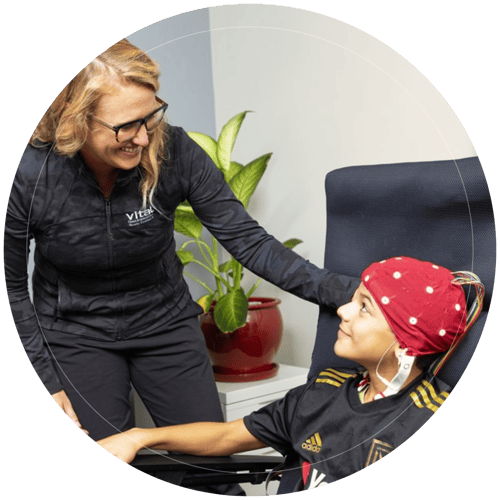
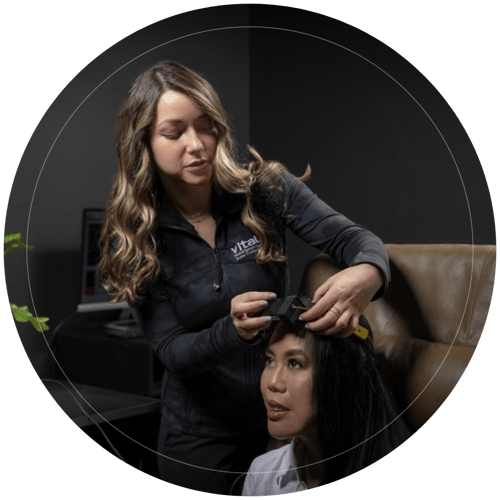
Neurofeedback
Neurofeedback utilizes advanced brain training to optimize your brain’s natural function using real-time feedback. This can help the different parts of your brain communicate more effectively, which in turn improves focus, emotional regulation, and cognitive performance. Best of all, no part of this process requires medication.
Biofeedback
Biofeedback involves retraining involuntary brain activity common in conditions like anxiety and depression. This helps clients learn to control things like their breathing and heart rate, which can help calm turbulent emotions triggered by their trauma.
Frequently Asked Questions
Neurofeedback helps the different parts of your brain, what we call “rooms,” communicate more effectively. Our neurofeedback therapy operates on principles of operant conditioning combined with neuroplasticity. Our Neurofeedback 3.0 protocols use a sophisticated multi-modal approach that combines traditional methods and cutting-edge technology to create protocols that evolve based on your progress and response patterns, helping us to better train the rooms in your brain to coordinate and better manage emotional responses, stress management, and more.
This reward-based training process translates to your ability to express new feelings and functions more easily and over the long term. As your brain's rooms get rewarded for coordinating on shared frequency channels, they build stronger nerve connections during sleep that help them maintain optimal communication patterns. Using our 19-room mansion model, we help your brain's rooms communicate more effectively through their 5-channel intercom system, creating lasting improvements in cognitive performance, emotional regulation, and overall brain health.
Our support for people with anxiety addresses the specific brain communication patterns that create and maintain anxious responses, helping individuals experiencing anxiety develop more balanced emotional regulation and stress management capabilities.
There is no one-size-fits-all number, because training is individualized from your qEEG brain map. Many adults working through trauma follow a training plan in the range of 30 to 40 sessions spread over several months, though your exact plan comes from the initial evaluation. As your brain responds, we adjust the protocol so the training keeps pace with your progress.
Yes. Alongside our Pasadena office, Vital Brain Health runs nationwide remote programs with home training equipment and clinician oversight. You train from the comfort and privacy of home, which many adults processing trauma prefer, while our team monitors your sessions and fine-tunes your protocol along the way.
Trauma affects every brain differently, so we never begin with a generic protocol. Our 3D qEEG brain mapping shows which networks in your brain are over-active or under-active, so your training targets the specific patterns your brain has developed, not a template built for someone else.
Enriquez-Geppert, Stefanie, et al. "The Morphology of Midcingulate Cortex Predicts Frontal-Midline Theta Neurofeedback Success." Frontiers in Human Neuroscience, vol. 7, 2013, pp. 1-10. Gruzelier, John H. "EEG-Neurofeedback for Optimising Performance. I: A Review of Cognitive and Affective Outcome in Healthy Participants." Neuroscience & Biobehavioral Reviews, vol. 44, 2014, pp. 124-141. Ros, Tomas, et al. "Consensus on the Reporting and Experimental Design of Clinical and Cognitive-Behavioural Neurofeedback Studies (CRED-nf Checklist)." Brain, vol. 143, no. 6, 2020, pp. 1674-1685. Micoulaud-Franchi, Jean-Arthur, et al. "Electroencephalographic Neurofeedback: Level of Evidence in Mental and Brain Disorders and Suggestions for Good Clinical Practice." Neurophysiologie Clinique, vol. 45, no. 6, 2015, pp. 423-433. Escolano, Carlos, et al. "EEG-Based Upper-Alpha Neurofeedback Training Improves Working Memory Performance." Proceedings of the Annual International Conference of the IEEE Engineering in Medicine and Biology Society, 2014, pp. 2327-2330. Vernon, David J. "Can Neurofeedback Training Enhance Performance? An Evaluation of the Evidence with Implications for Future Research." Applied Psychology, vol. 54, no. 3, 2005, pp. 385-404. Micoulaud-Franchi, Jean-Arthur, et al. "EEG Neurofeedback for Anxiety Disorders and Post-Traumatic Stress Disorders: A Blueprint for a Promising Brain-Based Therapy." Current Psychiatry Reports, vol. 23, no. 12, 2021, pp. 1-15. Panisch, Lindsay S., and Ashley H. Hai. "The Effectiveness of Using Neurofeedback in the Treatment of Post-Traumatic Stress Disorder: A Systematic Review." Trauma, Violence, & Abuse, vol. 21, no. 3, 2020, pp. 541-550.

Get the Neurofeedback You Need
Whether you're in the Los Angeles area or elsewhere in the United States, we can provide you the services you need.

Reach Out To Us

Professional Certifications