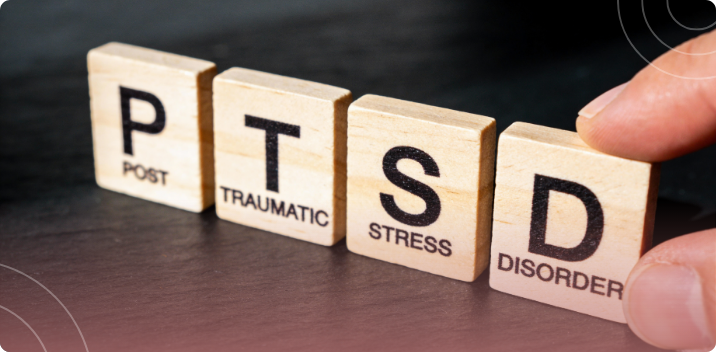
Post-traumatic stress disorder is not a weakness or a character flaw. It is a measurable change in how your brain processes threat, safety, and emotional regulation after experiencing something overwhelming. As the NIMH explains about lasting trauma responses, symptoms become a disorder when they persist long after the danger has passed and start interfering with daily life.
Conventional approaches to trauma recovery in adults usually center on talk therapy and medication. Those tools genuinely help many people, but they do not always reach the underlying brain dysregulation that keeps symptoms locked in place. Neurofeedback takes a different route. It teaches your brain to restore healthier activity patterns directly, so you can process what happened and regulate your emotions more steadily.
What does PTSD actually do to the brain?
PTSD keeps the brain's threat detection system switched on even after the danger is over, which is why the symptoms feel so physical and automatic. When you live through trauma, your brain rewires its communication patterns to prioritize survival above everything else. The amygdala, your built-in alarm, becomes overactive, while the prefrontal cortex responsible for reasoning and calm decision-making becomes underactive. Brain imaging research describes this as an overactive amygdala paired with a prefrontal cortex that fails to shut it off once the real danger has passed.
This imbalance traps you in perpetual defensive mode. The Cleveland Clinic explains that PTSD can keep the body locked in a fight-or-flight state, with the regions that handle memory, fear, and emotional response becoming overactive or less responsive. Think of it as an internal security system that once kept you alive in genuinely dangerous situations, then never learned to switch back off. A slammed door or a crowded room can register as a real emergency, producing flashbacks, exaggerated startle reactions, trouble concentrating, and the sense of being emotionally distant from the people you love.
How does neurofeedback work for PTSD?
Neurofeedback works by giving your brain real-time information about its own activity, then rewarding the patterns that signal calm and regulation. Sensors placed on the scalp track your brainwave activity and deliver an immediate cue whenever your brain shifts toward steadier, more balanced patterns. Over many repetitions, the brain learns to hold those patterns on its own. It is practice, not persuasion.
During a session, you might watch a movie or engage with a simple interactive program. When your brain produces regulated activity, the screen brightens or the program responds favorably. When activity drifts back toward an overactive state, the feedback changes. Nothing is sent into your brain, there are no needles, and you never have to talk about your trauma to benefit. Your brain simply uses the feedback to build stronger self-regulation, the same way muscle memory builds with practice. You can read more about how neurofeedback retrains the trauma response and how each protocol is tailored.
What does the research say about neurofeedback for PTSD?
The evidence is encouraging and growing, though researchers still describe its overall quality as moderate. A systematic review and meta-analysis of neurofeedback for PTSD reported significant reductions in PTSD symptoms after treatment, along with positive effects on related concerns like depression and anxiety.
Controlled studies point in the same direction. A randomized controlled study of neurofeedback for chronic PTSD found that a course of EEG neurofeedback produced meaningful symptom improvement among people who had not responded to other approaches, with effect sizes the authors described as comparable to established trauma therapies. A separate clinical review notes that innovative approaches such as neuronal feedback are being explored for treatment-resistant PTSD, which matters if you have already tried multiple conventional routes without lasting relief. We never promise a specific outcome, and we will always talk through what the research can and cannot tell you.
Which PTSD symptoms can brain training address?
Brain training can address the full range of PTSD symptoms because nearly all of them trace back to a brain stuck in high alert. Mayo Clinic groups PTSD symptoms into four categories: intrusive memories, avoidance, negative shifts in mood and thinking, and changes in physical and emotional reactions.
Persistent hypervigilance, intrusive memories, sudden flashbacks, and heightened startle reactions all stem from excessive threat-detection activity, and neurofeedback retrains those circuits to respond proportionally instead of treating ordinary life as a constant emergency. Emotional numbing, withdrawal from relationships, disrupted sleep, and nightmares also tend to ease as the brain develops stronger regulatory capacity. Because the approach restores healthy communication between dysregulated regions, it often improves several symptom clusters at once rather than chasing one symptom at a time.
Why do so many veterans turn to neurofeedback?
Veterans often choose neurofeedback because it is drug-free, does not require retelling their story, and complements existing care rather than replacing it. According to the VA's National Center for PTSD, roughly 7 percent of veterans will experience PTSD in their lifetime, with rates climbing far higher for some service eras. Combat exposure, repeated deployments, and military sexual trauma each create distinct injury patterns in the brain, and the VA maintains detailed PTSD resources that we encourage clients to review alongside whatever we plan together.
A heightened threat state is exactly what helps a service member respond instantly to danger in a combat zone. The problem starts when that system cannot switch back off in civilian life. Many veterans we work with have already been through standard programs and want something that addresses the neurological side of the problem while their care team continues to manage the overall plan. Brain training pairs well with trauma-focused therapies like EMDR, CPT, or prolonged exposure, and we coordinate with therapists, psychiatrists, and VA providers so the pieces work together.
What does a neurofeedback program for trauma look like?
Everything starts with comprehensive 3D qEEG brain mapping, followed by a personalized course of training, typically 20 to 40 sessions of about 45 minutes each over roughly four months. During the mapping visit, sensors record your brainwave activity while you rest and complete a few simple tasks. The process is painless and takes about an hour, and it produces a roadmap showing exactly where your brain is holding onto stress patterns.
That map matters because trauma does not look the same in every brain. Some people show excessive high-frequency activity that reflects constant alertness. Others show a disconnection between the regions that process emotion. Your protocol is built to address those specific imbalances rather than a generic PTSD template, and we track your map over time so you can see the change, not just feel it.
Trauma also does not live only in brainwaves. It shows up in racing heart rate, shallow breathing, and tense muscles, which is why many people pair brain training with biofeedback for the body's stress response. As the Cleveland Clinic explains, biofeedback helps people take control of automatic body functions like heart rate and breathing through real-time feedback and practice. Together the two approaches address both the brain and the body that learned to stay on guard.
What results can you expect, and do they last?
Most people notice gradual, layered improvements rather than a single dramatic moment, and the gains tend to persist because you are retraining response patterns, not masking symptoms. Sleep often improves within the first few weeks, hypervigilance frequently eases by around weeks six to eight, and reductions in intrusive thoughts and steadier emotional regulation tend to follow through the second and third months. Some clients are eventually able to reduce psychiatric medications, which is always a gradual decision made with the prescribing physician, never on your own.
PTSD is not limited to veterans, either. One clinical review reports a lifetime prevalence near 8 percent across the population. We work with survivors of childhood abuse, domestic violence, sexual assault, serious accidents, natural disasters, and workplace trauma, along with first responders who develop PTSD from repeated exposure on the job. Any experience that overwhelms the brain's ability to process can leave lasting dysregulation, and the same brain-training principles apply.
Can the brain really rewire after trauma?
Yes. The brain retains a remarkable capacity to reorganize itself throughout life. Researchers at the National Institute of Neurological Disorders and Stroke describe neuroplasticity as the brain's natural ability to adapt and repair itself, and that same adaptability is what makes brain training possible after trauma.
Living with PTSD does not make you damaged. Your brain adapted to extraordinary circumstances to keep you alive, and with the right support it can form new pathways that let you engage fully with everyday life again. Brain training simply helps your alert system understand that the danger has passed and you are safe now.
If you are ready to explore this path, Vital Brain Health provides trauma-informed, personalized neurofeedback backed by PhD scientific advisors. We see clients at our Pasadena, California office and support people across the country through our nationwide remote programs, so distance never has to be the barrier. Whether your trauma happened recently or decades ago, the work begins with a 3D qEEG brain map and a plan built around your actual brain.
Frequently Asked Questions
Is neurofeedback safe for trauma survivors?
Yes. Neurofeedback is non-invasive and drug-free, because sensors only read your brainwave activity, they do not send anything into your brain. You stay in full control of every session and can pause at any time, which makes it a gentle option for people who feel uneasy with talk-based approaches.
Do I have to talk about my trauma during sessions?
No. Brain training works at the level of brainwave patterns, so it does not depend on retelling your story. You simply sit comfortably and engage in calming feedback activities while your brain practices regulation. This makes it accessible for people who find exposure-based methods too distressing.
How many sessions does neurofeedback for PTSD take?
Most people complete 20 to 40 sessions of about 45 minutes each, with an initial trauma-recovery program running roughly four months. Many notice better sleep within the first few weeks and reduced hypervigilance by around weeks six to eight, though timelines vary with the complexity of the case.
Can neurofeedback replace my PTSD medication or therapy?
Neurofeedback is designed to work alongside your existing care, not to replace it on its own. It pairs well with trauma-focused therapies such as EMDR, CPT, or prolonged exposure, and we coordinate with your therapist, psychiatrist, or VA providers. Some clients do reduce medications over time, but only gradually and always under their prescribing physician's supervision.
Will the results last after I finish training?
Because neurofeedback targets the underlying response patterns rather than masking symptoms, many people report that improvements hold well after their sessions end. Sleep, emotional steadiness, and reduced reactivity tend to persist because the brain has learned a new default, and follow-up brain maps let you verify the change objectively.
Ready to take the next step?
Talk with the Vital Brain Health team about a Neurofeedback plan built around your brain and your goals.