
Neurofeedback for PTSD in Los Angeles & Pasadena
Post-traumatic stress disorder, or PTSD, can develop after you live through or witness a deeply frightening event. Long after the danger has passed, the brain can stay locked in a state of high alert, leaving you with flashbacks, anxiety, and sleepless nights that make everyday life feel exhausting.
At Vital Brain Health, we help adults, including veterans and first responders, who are carrying the weight of trauma. Our drug-free, brain-based approach gives your nervous system a way to settle so you can feel safe and steady again.
We create a calm, supportive space where healing feels possible. Schedule an appointment today and take the first step toward relief.
At a Glance
Neurofeedback is a drug-free, non-invasive brain training. At Vital Brain Health in Los Angeles and Pasadena, qEEG brain mapping guides real-time feedback that helps the brain networks behind fear and hyperarousal settle, so adults living with PTSD can ease flashbacks, sleep better, and feel safe in their bodies again, without medication.
What is PTSD?
PTSD is a condition that can develop after a traumatic experience such as combat, an assault, a serious accident, or the sudden loss of someone close. Instead of fading with time, the memory keeps the brain's threat system switched on, so reminders of the event can trigger intense fear, panic, or the sense of reliving it.
At Vital Brain Health, we focus on the brain patterns underneath those reactions. By helping the regions that drive the stress response learn to calm and coordinate, we support real, lasting recovery without medication.
Schedule an appointment with Vital Brain Health today and let our team help you move forward at your own pace.
Common Risk Factors Linked to PTSD
Anyone can develop PTSD, but some experiences make it more likely. Risk factors associated with PTSD include:
Combat and Military Service
Service members and veterans exposed to combat, life-threatening situations, or repeated deployments are at higher risk of developing PTSD.
Assault or Abuse
Surviving physical or sexual assault, domestic violence, or childhood abuse is one of the most common sources of lasting trauma.
Serious Accidents and Injury
Car crashes, workplace accidents, and other sudden injuries can leave the brain stuck in a heightened state of alarm.
Sudden Loss or Life Threat
The unexpected death of a loved one, a natural disaster, or any event that threatened your life can set the stage for PTSD.
Repeated Exposure at Work
People repeatedly exposed to trauma through their work, such as first responders and healthcare workers, can develop PTSD over time.
Key takeaway
PTSD is not a weakness or something you simply have to live with. Drug-free, qEEG-guided neurofeedback helps your brain unlearn the stuck fight-or-flight patterns that trauma leaves behind, so you can feel calmer and more in control, in our Pasadena office or remotely.
What symptoms are associated with PTSD?
PTSD symptoms can vary in type and severity. Some of the symptoms that benefit from an evaluation at Vital Brain Health include:
If you would like to understand this approach in more depth before you reach out, our guide to neurofeedback for PTSD walks through how brain training supports veterans and trauma survivors across Los Angeles. And if you are curious about the evaluation itself, our clinicians explain what a qEEG brain map actually shows and how it shapes every plan we build.
What are the Support Options for PTSD?
Vital Brain Health offers different types of support, each serving a different purpose. Some of the support you may be recommended include:
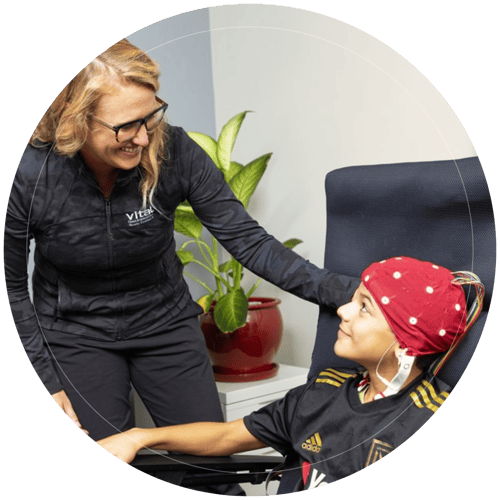
Neurofeedback
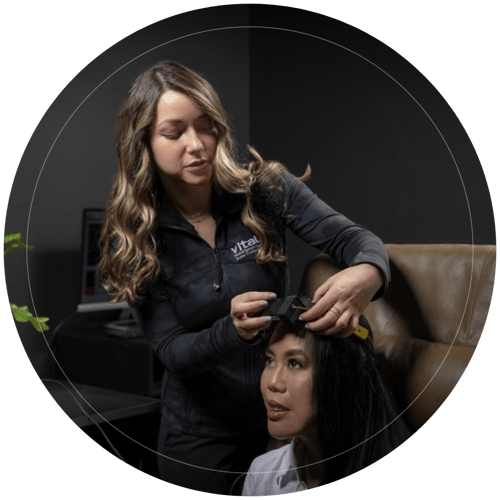
Neurofeedback uses real-time feedback to help the brain networks behind fear and hyperarousal learn calmer, more balanced patterns. For PTSD, this can ease flashbacks, improve sleep, and help you feel more in control, all without medication.
Biofeedback
Biofeedback teaches you to recognize and calm the physical stress responses trauma can trigger, like a racing heart or shallow breathing, giving you practical tools to steady yourself when reminders surface.
Frequently Asked Questions
With PTSD, the brain often stays stuck in a fight-or-flight state long after the danger is gone. Neurofeedback uses qEEG-guided, real-time feedback to reward calmer, more regulated brain activity, helping the networks that drive fear and hyperarousal learn to settle. Over a series of sessions, many people notice fewer flashbacks, better sleep, and a steadier sense of calm. Research on neurofeedback for PTSD continues to grow, and we build every plan on your own brain map rather than a one-size-fits-all protocol.
Yes. Neurofeedback is drug-free and non-invasive. There are no medications and no surgery, you simply relax while sensors read your brain activity and the system guides it toward healthier patterns. It can be used on its own or alongside the care you may already be receiving.
We do. We support adults from all walks of life, including veterans, first responders, and healthcare workers who carry job-related trauma. Care is available in our Pasadena office and through remote programs, so you can train from wherever you feel most comfortable.
There is no single number, because training is individualized from your qEEG brain map. Many training plans run in the range of 30 to 40 sessions over several months, and consistency matters more than speed. Your exact plan comes from the initial evaluation, where we review your brain map with you and map out a schedule that fits your life.
Yes. Vital Brain Health runs nationwide remote programs with home training equipment and clinician oversight, so you can train consistently without coming into the office. Many people living with trauma find it easier to settle into training from a place that already feels safe, and our team guides you every step of the way.
Before any training begins, qEEG brain mapping gives us a 3D picture of your brain's activity. The map shows which networks are over-active or under-active, which is how we see the stuck stress patterns trauma can leave behind. Your training then targets your brain's specific patterns rather than following a generic protocol.
van der Kolk, Bessel A., et al. "A Randomized Controlled Study of Neurofeedback for Chronic PTSD." PLoS ONE, vol. 11, no. 12, 2016, e0166752. Peniston, Eugene G., and Paul J. Kulkosky. "Alpha-Theta Brainwave Neurofeedback for Vietnam Veterans with Combat-Related Post-Traumatic Stress Disorder." Medical Psychotherapy, vol. 4, 1991, pp. 47-60. Panisch, Lindsay S., and Ashley H. Hai. "The Effectiveness of Using Neurofeedback in the Treatment of Post-Traumatic Stress Disorder: A Systematic Review." Trauma, Violence, & Abuse, vol. 21, no. 3, 2020, pp. 541-550. Gapen, Mark, et al. "A Pilot Study of Neurofeedback for Chronic PTSD." Applied Psychophysiology and Biofeedback, vol. 41, no. 3, 2016, pp. 251-261. Micoulaud-Franchi, Jean-Arthur, et al. "EEG Neurofeedback for Anxiety Disorders and Post-Traumatic Stress Disorders: A Blueprint for a Promising Brain-Based Therapy." Current Psychiatry Reports, vol. 23, no. 12, 2021, pp. 1-15.

Get the Neurofeedback You Need
Whether you're in the Los Angeles area or elsewhere in the United States, we can provide you the services you need.

Reach Out To Us
Professional Certifications