
Neurofeedback for Emotional Regulation in Children, Los Angeles & Pasadena
Emotional regulation is an important developmental process in children. This stage of life is what sets children up to be able to control their behavior and emotions at older ages. For some children, though, they struggle with emotional regulation.
At Vital Brain Health, we provide optimal support to help your child learn emotional regulation. We work with you to develop a plan that can help your child succeed.
Schedule an appointment today and get the support your child needs.
At a Glance
Neurofeedback is a drug-free, non-invasive brain-training method. At Vital Brain Health, we start with qEEG brain mapping, then use real-time feedback to help the regions involved in emotional regulation communicate more effectively, so children in Los Angeles and Pasadena can better steady their emotions and reduce outbursts.
What is Emotional Regulation?
Emotional regulation is the ability for kids to regulate and control their emotions. Normally, children learn these skills as they age and as their parents guide them. However, some children, for various reasons, will struggle with emotional regulation.
At Vital Brain Health, we are dedicated to providing the support children need to succeed. We avoid unnecessary medications and surgeries with our approach while still providing you optimal care.
If your child is struggling with emotion regulation, schedule an appointment today. Our staff is ready to work with you to help your child thrive.
Common Risk Factors Associated with Emotional Regulation Problems
Understanding the risk factors associated with emotional dysregulation can help you get your child the support they need to succeed. Problems with emotional regulation often result from one of a variety of factors:
Abuse
Any form of abuse can have a severe impact on a child's ability to regulate their emotions and develop coping mechanisms for emotional regulation.
Related Conditions
Anxiety, depression, and other related conditions can cause issues with emotional regulation.
Head Injuries
Head injuries and traumatic brain injuries can cause changes in the brain that can cause emotional regulation challenges.
Key takeaway
Emotional regulation is a skill some children struggle to build on their own. With qEEG-guided neurofeedback, our team helps your child's brain learn to self-regulate, drug-free and without surgery.
What symptoms are associated with emotional dysregulation?
Because worry and big emotions so often travel together, our clinicians took a close look at whether neurofeedback helps a child with anxiety, written in plain language for parents weighing their options.
If you are wondering about the timeline, we also explain how long neurofeedback takes to work so you know what to expect before your child's first session.
What are the Support Options for Emotional Regulation Problems?
Vital Brain Health offers different types of support, each serving a different purpose. Some of the support options you may be recommended include:
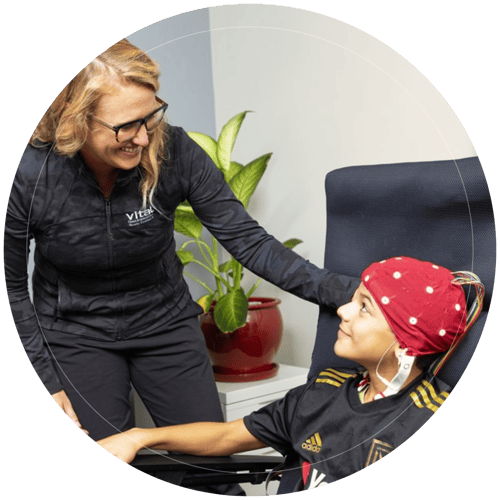
Neurofeedback
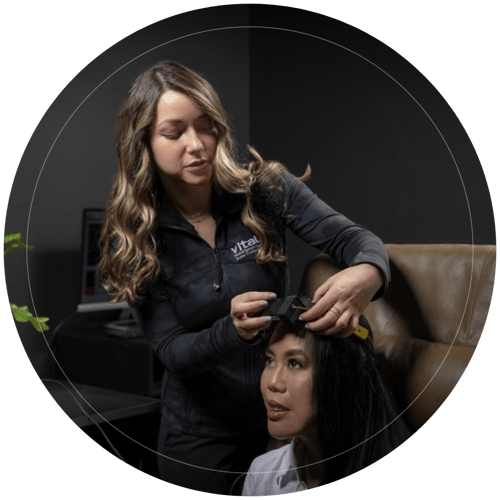
Neurofeedback utilizes advanced brain training to optimize your brain’s natural function using real-time feedback. This can help the different parts of your brain communicate more effectively, which in turn improves focus, emotional regulation, and cognitive performance. Best of all, no part of this process requires medication.
Biofeedback
Biofeedback involves retraining involuntary brain activity and physical responses. This helps clients learn to control things like their breathing and heart rate, which can help calm turbulent emotions.
Frequently Asked Questions
Yes, our Neurofeedback 3.0 approach helps clients of all ages become skilled mansion managers, teaching their brains to optimize communication systems across all channels. For children, we specialize in helping those with emotional dysregulation, autism spectrum differences, and sensory processing challenges.
Many individuals have combinations of brain room patterns that create what are often called "co-morbidities", such as people with both autism and anxiety, or individuals with ADHD and emotional dysregulation. Our Neurofeedback 3.0 integrated multi-modal approach is particularly well-suited for supporting people with these complex, overlapping patterns because we can target multiple room combinations simultaneously.
Vital Brain Health stands apart as Los Angeles' premier evidence-based neurofeedback center through our Neurofeedback 3.0 approach, an integrated multi-modal training system that represents a comprehensive meta-strategy pulling from many forms of analysis and neurofeedback tools. While other practices use basic single-method training, we strategically combine multiple analysis methods including AI-based analysis, network connectivity assessment, normative database comparisons, and symptom tracking to create the most personalized and effective training for each individual. When standard treatments and budget neurofeedback options have failed, discerning families and individuals choose us for results-driven, scientifically-validated training.
Every child's training plan is individualized from their qEEG brain map, so there is no one-size-fits-all number. Many training plans run in the range of 30 to 40 sessions over several months, and the exact plan for your child comes from the initial evaluation.
Yes, neurofeedback is non-invasive and drug-free. Nothing enters the brain: the sensors only read your child's brain activity while the training provides real-time feedback. Some children notice temporary tiredness after early sessions, and our team monitors how your child responds throughout training.
Yes. Vital Brain Health runs nationwide remote programs with home training equipment and clinician oversight, so families outside the Los Angeles and Pasadena area can train from home with the same qEEG-guided approach.
Ros, Tomas, et al. "Consensus on the Reporting and Experimental Design of Clinical and Cognitive-Behavioural Neurofeedback Studies (CRED-nf Checklist)." Brain, vol. 143, no. 6, 2020, pp. 1674-1685. Micoulaud-Franchi, Jean-Arthur, et al. "Electroencephalographic Neurofeedback: Level of Evidence in Mental and Brain Disorders and Suggestions for Good Clinical Practice." Neurophysiologie Clinique, vol. 45, no. 6, 2015, pp. 423-433. Vernon, David J. "Can Neurofeedback Training Enhance Performance? An Evaluation of the Evidence with Implications for Future Research." Applied Psychology, vol. 54, no. 3, 2005, pp. 385-404

Get the Neurofeedback You Need
Whether you're in the Los Angeles area or elsewhere in the United States, we can provide you the services you need.

Reach Out To Us

Professional Certifications