
Neurofeedback for Depression in Children, Los Angeles & Pasadena
Depression is a serious brain-based condition that affects children as easily as it does adults. While children may not display the same symptoms as adults and young adults, depression can play a role in abnormal behaviors.
If you're concerned about your child's emotional well-being, we at Vital Brain Health can help. We provide comprehensive support using advanced neuroscience to provide your child with coping strategies and to support their emotional wellness in a supportive environment.
At a Glance
Neurofeedback is a drug-free, non-invasive brain-training method. At Vital Brain Health, qEEG brain mapping shows how a child's brain produces emotion and mood, then real-time feedback gently trains healthier patterns to support emotional regulation and ease childhood depression, no medication required.
What is Depression?
Depression is a mood disorder and brain-based condition that leads to extreme feelings of sadness that interfere with a child's relationships and activities.
At Vital Brain Health, we use neurofeedback and other forms of support to help your child learn effective coping skills in a safe space where they can build up their self-esteem. We use the latest research in neuroscience to guide our support and cater them to your child's unique challenges.
Schedule an appointment with Vital Brain Health today and see how our services can support your child as they learn to overcome their depression.
Common Risk Factors Associated With Depression in Children
Understanding the potential risk factors associated with depression can give you insight into how to better support your child. Depression in children is often the result of one of a variety of factors:
Family History
A family history of depression means there is a potential genetic predisposition for the condition.
Physical Illness or Injury
Chronic illnesses and injuries can trigger depression in children. Chronic pain due to an underlying condition can similarly cause emotional health concerns.
Stressful Life Events
Stressful or traumatic life events like the sudden death of a loved one can trigger depression in children.
Substance Use
Drug abuse or other forms of substance abuse can affect the emotional well-being of children and teens.
Bullying
Bullying is a common source of depression and other related conditions in children.
Key takeaway
Childhood depression often reflects how the brain regulates emotion, not a personal failing. Drug-free, qEEG-guided neurofeedback at Vital Brain Health helps your child build steadier mood and stronger coping skills in a supportive space.
What symptoms are associated with depression?
If you would like to learn more before you reach out, our clinicians wrote understanding neurofeedback for childhood depression, a plain-English walkthrough that helps parents understand what training involves and what to expect along the way.
What are the Support Options for Depression in Children?
Vital Brain offers different types of support, each serving a different purpose. Some of the support options you may be recommended include:
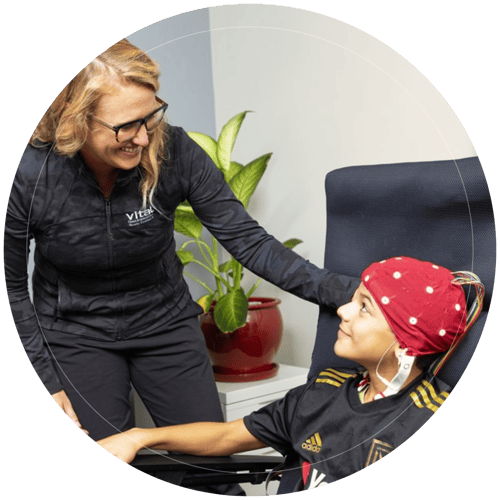
Neurofeedback
Neurofeedback utilizes advanced brain training to optimize your brain’s natural function using real-time feedback.This can help the different parts of your brain communicate more effectively, which in turn improves focus, emotional regulation, and cognitive performance. Best of all, no part of this process requires medication.
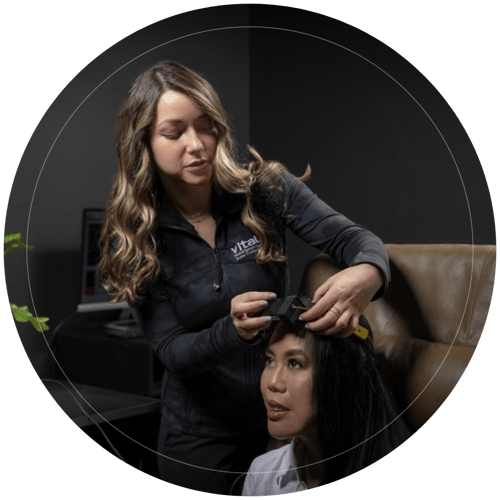
Biofeedback
Biofeedback involves retraining involuntary brain activity common in conditions like anxiety and depression. This helps clients learn to control things like their breathing and heart rate, which can help calm turbulent emotions triggered by depression and other related conditions.
Frequently Asked Questions
Yes, neurofeedback can help support children with depression. Our non-invasive neurofeedback support provides an evidence-based insight into optimizing brain function to create highly-customized protocols that deliver measurable improvement to cognitive function, emotional regulation, focus, attention, and overall quality of life.
At Vital Brain Health, we've pioneered what we call Neurofeedback 3.0, representing an integrated multi-modal training approach that combines the best elements from all available methods and technologies.
A typical Neurofeedback 3.0 session at Vital Brain Health lasts 15-30 minutes and offers a uniquely engaging experience. In our office, you'll relax in zero gravity chairs while your brain controls how clear your favorite shows appear on 70-inch TVs. For home training, you'll use our custom cap with gold-plated sensors connected to your phone or tablet. Our extremely effective forms of neurofeedback require shorter sessions than weaker training methods, maximizing your results in minimal time.
Every plan is individualized. Training is guided by your child's qEEG brain map, so the number of sessions depends on what the map shows and how your child responds. Many training plans run in the range of 30 to 40 sessions over several months, and the exact plan for your child comes from the initial evaluation.
Yes, neurofeedback is non-invasive and drug-free. Nothing enters your child's brain: the sensors only read brain activity while the feedback gently guides training. Some children notice temporary tiredness after early sessions, and our clinicians monitor every step so training stays comfortable.
Yes. Vital Brain Health runs nationwide remote programs with home training equipment and clinician oversight, so your child can complete sessions from home no matter where your family lives.
Enriquez-Geppert, Stefanie, et al. "The Morphology of Midcingulate Cortex Predicts Frontal-Midline Theta Neurofeedback Success." Frontiers in Human Neuroscience, vol. 7, 2013, pp. 1-10. Ros, Tomas, et al. "Consensus on the Reporting and Experimental Design of Clinical and Cognitive-Behavioural Neurofeedback Studies (CRED-nf Checklist)." Brain, vol. 143, no. 6, 2020, pp. 1674-1685. Thibault, Robert T., et al. "Neurofeedback, Self-Regulation, and Brain Imaging: Clinical Science and Fad in the Development of a Neurotechnology." NeuroImage, vol. 76, 2013, pp. 120-129. Micoulaud-Franchi, Jean-Arthur, et al. "Electroencephalographic Neurofeedback: Level of Evidence in Mental and Brain Disorders and Suggestions for Good Clinical Practice." Neurophysiologie Clinique, vol. 45, no. 6, 2015, pp. 423-433. Marzbani, Hamed, et al. "Neurofeedback: A Comprehensive Review on System Design, Methodology and Clinical Applications." Basic and Clinical Neuroscience, vol. 7, no. 2, 2016, pp. 143-158. Thatcher, Robert W., et al. "Quantitative EEG Analysis Methods and Clinical Applications." Artech House, 2009.

Get the Neurofeedback You Need
Whether you're in the Los Angeles area or elsewhere in the United States, we can provide you the services you need.

Reach Out To Us

Professional Certifications