
Neurofeedback for ADHD in Adults, Los Angeles & Pasadena
While attention-deficit/hyperactivity disorder (ADHD) commonly affects children, it can also be present in adults. While ADHD may present differently in adults, it can still cause problems in a person's day-to-day life. Effectively helping to support clients with ADHD without the need for medication management often becomes a concern for many adults living with the condition.
If you're looking to get ADHD support that doesn't require stimulant medications, look no further than Vital Brain Health. We can help improve function in those who have ADHD.
Schedule an appointment for ADHD support with Vital Brain Health today.
At a Glance
Neurofeedback is a drug-free, non-invasive training that helps adults with ADHD strengthen the brain networks behind focus, organization, and impulse control. At Vital Brain Health in Los Angeles, we map your brain with qEEG, then guide it with real-time feedback so gains in attention and self-regulation hold over time, without stimulant medication.
What is ADHD?
Attention-deficit/hyperactivity disorder, also known as ADHD, is a long-term neurodevelopmental condition that is primarily seen in children but also impacts many adults. Oftentimes ADHD manifests in childhood, but, either because of a lack of symptoms or an ADHD evaluation never being performed, the condition is not identified until adulthood.
At Vital Brain Health, we provide accurate identification and personalized plans to help you live your daily life without the frustrations of ADHD. We can help you overcome your impulsivity and other challenges that ADHD can cause.
Schedule an appointment today and get a comprehensive evaluation and personalized care with Vital Brain Health.
Common Risk Factors Linked to ADHD in Adults
Currently there is no clear cause of ADHD. While research continues to be conducted, there are a few risk factors that have been identified. Risk factors associated with ADHD include:
Genetics
A family history of ADHD or other related conditions increases the likelihood of it developing in other members of the family.
Environmental Toxins
Exposure to environmental toxins such as lead can impact the development of the brain and cause conditions like ADHD.
Parents With Addiction
Having a parent who used recreational drugs, alcohol, or tobacco during pregnancy can increase the chance of a person developing ADHD.
Premature Birth
Premature births can lead to multiple potential developmental disorders.
Key takeaway
Many adults reach us after years of managing ADHD with workarounds and willpower. Neurofeedback targets the brain-communication patterns behind adult ADHD directly, and because every plan starts from your own qEEG brain map, the training is built around how your brain actually works rather than a generic protocol.
What symptoms are associated with ADHD?
Symptoms associated with ADHD can vary in type and severity. Some of the symptoms that benefit from an evaluation at Vital Brain Health include:
Curious what the process feels like week to week? Our clinicians wrote a plain-English look at how long neurofeedback takes to work so you know what most adults notice in the early sessions. They also mapped out what a realistic training timeline looks like from your first brain map to results that hold.
What are the Support Options for ADHD?
Vital Brain Health offers different types of training, each serving a different purpose. Some of the support you may receive includes:
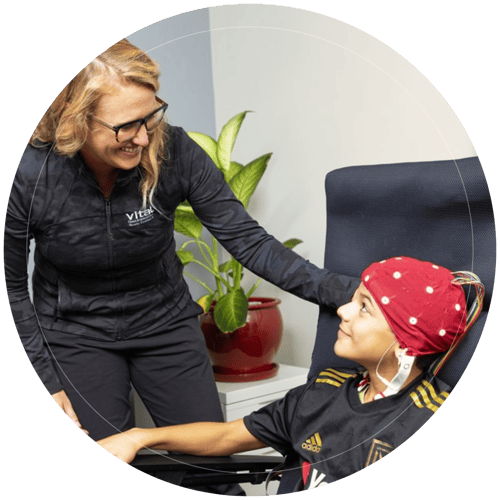
Neurofeedback
Neurofeedback utilizes advanced brain training to optimize your brain’s natural function using real-time feedback. This can help the different parts of your brain communicate more effectively, which in turn improves focus, emotional regulation, and cognitive performance. Best of all, no part of this process requires medication.
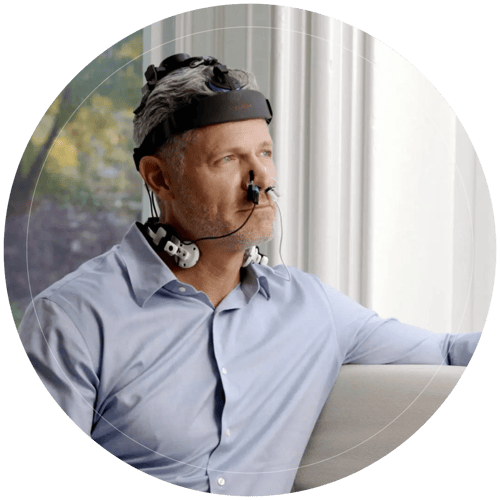
Photobiomodulation
Photobiomodulation helps clients learn to retrain involuntary physical responses to better control conditions such as ADHD.
Frequently Asked Questions
Yes, we provide advanced support for people with ADHD using Neurofeedback 3.0 integrated multi-modal training protocols specifically designed for individuals with attention deficit hyperactivity disorder and executive function challenges. Our approach helps optimize brain networks responsible for focus, impulse control, and cognitive flexibility in people with ADHD. We serve both children and adults with ADHD, using research-based protocols that target the specific brain communication patterns underlying attention difficulties in individuals with ADHD.
Our protocols for people with ADHD use Neurofeedback 3.0 to help the brain's attention and executive function "rooms" learn to communicate more effectively in individuals with attention deficit hyperactivity disorder. We target specific brain networks that control focus, impulse regulation, and cognitive flexibility in people with ADHD. Through our visual feedback system, these brain areas learn to coordinate on shared frequency channels, developing stronger connections during sleep that lead to improved attention, better impulse control, and enhanced executive function in daily life for individuals with ADHD.
We help people with all ADHD subtypes. Whether someone has primarily inattentive type, hyperactive-impulsive type, or combined presentation, our Multi-Layer Analysis identifies which parts of the brain are involved for each individual with attention deficit hyperactivity disorder. Our research-based protocols for supporting people with ADHD are designed to optimize these exact brain networks through targeted training.
Training is individualized, so there is no single number that fits everyone. Your plan starts from your own qEEG brain map, and many training plans run in the range of 30 to 40 sessions over several months. The exact plan for your brain comes from the initial evaluation.
Yes. Vital Brain Health runs nationwide remote programs with home training equipment and clinician oversight, so adults outside the Pasadena area can train from home with the same qEEG-guided approach.
Before training begins, qEEG brain mapping shows which of your brain networks are over-active and which are under-active. That map lets us aim the training at your brain specifically, rather than a generic ADHD protocol, so sessions focus on the exact communication patterns behind your attention and impulse-control challenges.
Thibault, Robert T., et al. "Neurofeedback, Self-Regulation, and Brain Imaging: Clinical Science and Fad in the Development of a Neurotechnology." NeuroImage, vol. 76, 2013, pp. 120-129. Arns, Martijn, et al. "Evaluation of Neurofeedback in ADHD: The Long and Winding Road." Biological Psychology, vol. 95, 2014, pp. 108-115. Lubar, Joel F., et al. "Evaluation of the Effectiveness of EEG Neurofeedback Training for ADHD in a Clinical Setting as Measured by Changes in T.O.V.A. Scores, Behavioral Ratings, and WISC-R Performance." Biofeedback and Self-Regulation, vol. 20, no. 1, 1995, pp. 83-99. Monastra, Vincent J., et al. "Electroencephalographic Biofeedback in the Treatment of Attention-Deficit/Hyperactivity Disorder." Applied Psychophysiology and Biofeedback, vol. 27, no. 4, 2002, pp. 261-279. Pigott, E. Heather, and Rex Cannon. "Neurofeedback is the Best Available First-Line Treatment for ADHD: What is the Evidence for this Claim?" Journal of NeuroRegulation, vol. 1, no. 1, 2014, pp. 4-23. Rasey, Howard W., et al. "EEG Biofeedback for the Enhancement of Attentional Processing in Normal College Students." Journal of Neurotherapy, vol. 1, no. 3, 1996, pp. 15-21.

Get the Neurofeedback You Need
Whether you're in the Los Angeles area or elsewhere in the United States, we can provide you the services you need.

Reach Out To Us

Professional Certifications