
Neurofeedback for Peak Performance in Los Angeles & Pasadena
Whether you compete on a field, lead a team, sit for high-stakes exams, or step onto a stage, your brain is the engine behind every result. When attention drifts, nerves take over, or you cannot quite reach that effortless state of flow, even a small edge in brain function can change the outcome.
At Vital Brain Health, we work with healthy high performers who want to get more out of an already-capable brain. Our drug-free, brain-based training helps you sharpen focus, recover faster, and perform at your best when it matters most.
We tailor every program to your goals and your own brain map. Schedule an appointment today and start training for your next level.
At a Glance
Neurofeedback is a drug-free, non-invasive form of brain training. At Vital Brain Health in Los Angeles and Pasadena, qEEG brain mapping guides real-time feedback that helps healthy athletes, executives, students, and performers strengthen focus, reach flow states more easily, and stay composed under pressure, no medication required.
What is Peak Performance Training?
Peak performance training is brain optimization for healthy, high-functioning people who want a sharper, more resilient mind. Using qEEG brain mapping, we look at how your brain produces focus, calm, and quick processing, then use neurofeedback to guide your brain toward more efficient patterns. This is not about treating an illness, it is about helping a healthy brain do what it already does, only better.
At Vital Brain Health, we design every program around your goals, whether you are an athlete chasing consistency, an executive managing constant demands, a student preparing for big exams, or a performer who wants to stay calm and present under the lights. We avoid medication and invasive procedures and instead train the brain directly.
Ready to train your brain for your next level? Schedule an appointment with Vital Brain Health today.
Who Benefits from Peak Performance Training
Peak performance training is for anyone who depends on a focused, composed, resilient mind. People who often see the biggest gains include:
Athletes
Athletes use peak performance training to sharpen focus, steady their nerves, and find flow more consistently, so their mental game can keep pace with their physical talent.
Executives and Professionals
Leaders and professionals train to stay clear-headed under pressure, make decisions with composure, and sustain attention through long, demanding days.
Students and Academics
Students and academics work on focus, study stamina, and staying calm during high-stakes exams, so their preparation shows up when it counts.
Performers and Creatives
Musicians, actors, and other performers train to quiet performance nerves, stay present, and access the relaxed, focused state where their best work happens.
Key takeaway
Peak performance training is not about fixing a problem, it is about optimizing an already-capable brain. Drug-free, qEEG-guided neurofeedback helps you sharpen focus, access flow, and recover faster, in our Pasadena office or remotely.
What peak performance training helps you sharpen
Peak performance training targets the brain skills that separate a good day from your best. Areas we help you sharpen include:
Want to see what this training looks like for real athletes, executives, and creatives in Los Angeles? Our clinicians wrote about how peak performers train their mental edge, from the first brain map through the gains that show up under pressure.
If you are more curious about the mechanics, start with how neurofeedback for peak performance works, a plain-English walkthrough of what actually happens in each session.
What are the Support Options for Peak Performance?
Vital Brain Health offers different types of training, each serving a different purpose. Some of the options you may be recommended include:
Neurofeedback
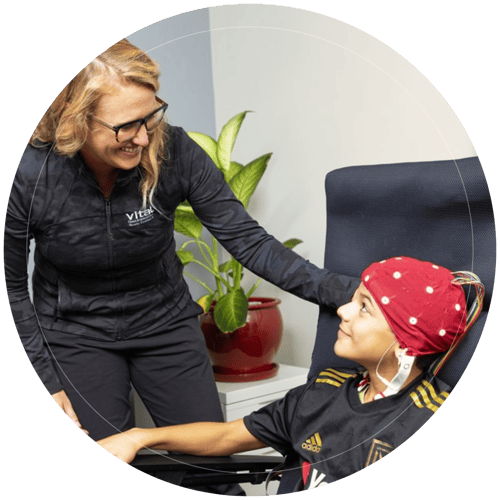
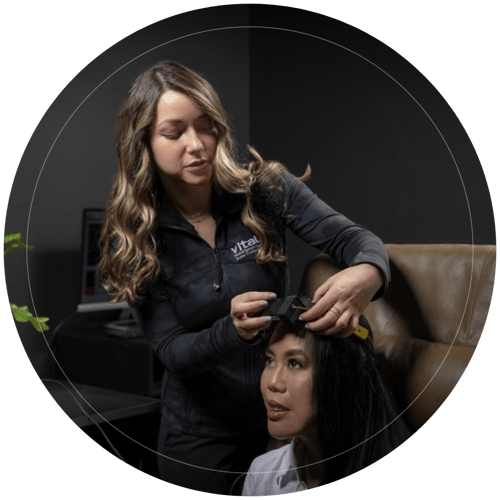
Neurofeedback uses real-time feedback to help your brain learn the efficient patterns behind focus, calm, and flow. For peak performance, this can mean steadier concentration, quicker recovery between efforts, and the ability to stay composed and present when the pressure is on, all without medication.
Biofeedback
Biofeedback teaches you to recognize and control the physical signs of stress, like a racing heart or shallow breathing, so you can settle your body on demand. For high performers, this builds practical tools to stay calm, focused, and in command of your nerves in the moments that matter.
Frequently Asked Questions
Neurofeedback uses qEEG-guided, real-time feedback to reward the brain patterns linked to focus, calm, and flow. As your brain practices producing those patterns, the skills behind sustained attention, quick processing, and composure under pressure can become more reliable. Over a series of sessions, many high performers notice steadier focus, faster recovery, and an easier path into their best state. We build every program on your own brain map rather than a one-size-fits-all protocol.
No. Peak performance training is designed for healthy, high-functioning people who simply want more from an already-capable brain. You do not need a diagnosis or a problem to train, athletes, executives, students, and performers all use neurofeedback to sharpen focus, build resilience, and perform more consistently.
We start with a qEEG brain map that shows how your brain is producing focus, calm, and processing speed, which gives us a clear baseline and a personalized plan. As you train, we track changes in those brain patterns and check in on your real-world goals, so we can adjust your protocol and keep your program aimed at the results that matter most to you.
There is no one-size-fits-all number, because every program is individualized from your qEEG brain map and your specific goals. Many training plans run in the range of 30 to 40 sessions over several months, and your exact plan comes from the initial evaluation, where we review your brain map with you and lay out a clear path forward.
Yes. Neurofeedback is non-invasive and drug-free, and nothing enters the brain during a session. The sensors only read your brain activity while the software gives your brain feedback in real time. Some people notice temporary tiredness after early sessions, much like the feeling after a good workout, and this typically fades as training continues.
Yes. Vital Brain Health runs nationwide remote programs with home training equipment and clinician oversight, so athletes, executives, students, and performers anywhere in the country can train on their own schedule. Our team monitors your progress and adjusts your protocol along the way, just as we would in our Pasadena office.
Gruzelier, John H. "EEG-Neurofeedback for Optimising Performance. I: A Review of Cognitive and Affective Outcome in Healthy Participants." Neuroscience & Biobehavioral Reviews, vol. 44, 2014, pp. 124-141. Vernon, David J. "Can Neurofeedback Training Enhance Performance? An Evaluation of the Evidence with Implications for Future Research." Applied Psychology, vol. 54, no. 3, 2005, pp. 385-404. Mirifar, Arash, et al. "Neurofeedback as Supplementary Training for Optimizing Athletes' Performance: A Systematic Review with Implications for Future Research." Neuroscience & Biobehavioral Reviews, vol. 75, 2017, pp. 419-432. Escolano, Carlos, et al. "EEG-Based Upper-Alpha Neurofeedback Training Improves Working Memory Performance." Proceedings of the Annual International Conference of the IEEE Engineering in Medicine and Biology Society, 2014, pp. 2327-2330. Ros, Tomas, et al. "Consensus on the Reporting and Experimental Design of Clinical and Cognitive-Behavioural Neurofeedback Studies (CRED-nf Checklist)." Brain, vol. 143, no. 6, 2020, pp. 1674-1685.

Get the Neurofeedback You Need
Whether you're in the Los Angeles area or elsewhere in the United States, we can provide you the services you need.

Reach Out To Us

Professional Certifications