Neurofeedback for Concussions in Children, Los Angeles & Pasadena
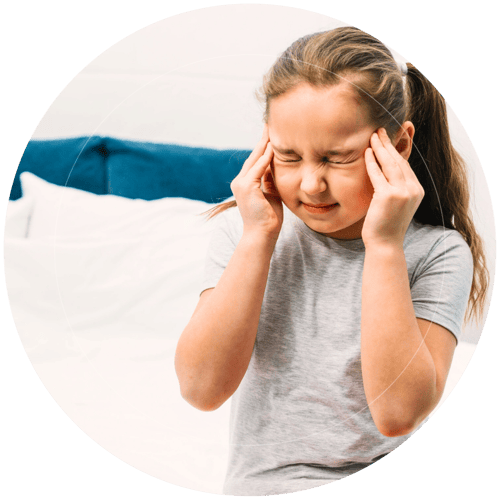
A concussion is a traumatic brain injury and requires immediate medical attention. Children who get effective support will usually return to their normal selves after a few weeks to a month of rest and healing. However, damage to a child's brain can often have unforeseen effects. If you're concerned about lasting damage to your child's brain, you need an assessment from a specialist in neuroscience.
At Vital Brain Health, we provide comprehensive support to help identify concussions and the lingering effects they can have on children.
Schedule an appointment with Vital Brain Health today and get the care your child needs.
At a Glance
Neurofeedback is a drug-free, non-invasive brain-training method. At Vital Brain Health, qEEG brain mapping pinpoints how a child's brain is functioning after a concussion, then real-time feedback gently trains healthier patterns to help ease lingering symptoms and support recovery.
What is Concussion?
A concussion is a severe TBI that affects the brain's functions and can lead to headaches, dizziness, and confusion. Sports concussions are one of the most common forms of a concussion. The symptoms of a concussion will usually go away after a few days to a month of rest. Sometimes, though, the symptoms can last longer.
At Vital Brain Health, we are dedicated to relieving the effects concussions have on children with our excellent and innovative techniques. We avoid unnecessary medications and surgeries with our approach while still providing optimal healing.
If your child suffered a concussion, schedule an appointment with Vital Brain Health. We can provide the care your child needs in order to make a complete recovery.
Common Causes of Concussions
Understanding the potential causes of concussions can help you prevent them in the future. Concussions are often the result of one of a variety of factors:
Sports Injuries
Concussions are a common form of sports injury.
Head Impacts
Severe impacts to the head can cause concussions and other forms of traumatic brain injuries.
Key takeaway
If your child had a concussion, you do not have to rely on medication alone. Our drug-free, qEEG-guided neurofeedback helps the brain heal and return to feeling like itself.
What symptoms are associated with concussions?
Symptoms of concussions can vary in type and severity. Concussion symptoms that benefit from an evaluation at Vital Brain Health include:
Many parents want to understand the full picture before their child's first appointment, so our team put together our complete guide to neurofeedback for concussion and TBI recovery, which walks through the evaluation, the brain map, and what training actually looks like.
And if your child's symptoms have lingered past the expected healing window, we explain why persistent concussion symptoms need more than rest, along with the signs that it is time for a deeper look at how the brain is functioning.
What are the Support Options for Concussions?
Vital Brain Health offers different types of support, each serving a different purpose. Some of the support you may be recommended include:
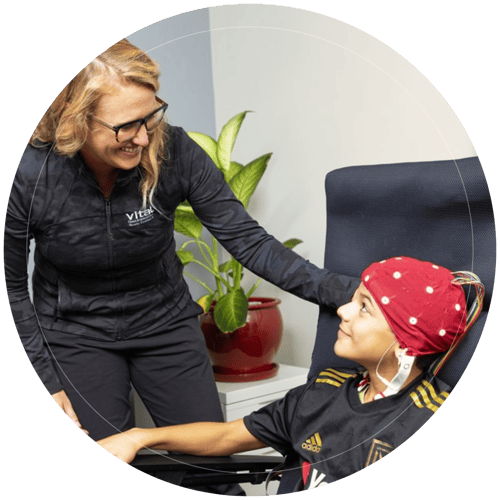
Neurofeedback
Neurofeedback utilizes advanced brain training to optimize your brain's natural function using real-time feedback. This can help the different parts of your brain communicate more effectively, which in turn improves focus, emotional regulation, and cognitive performance. Best of all, no part of this process requires medication.
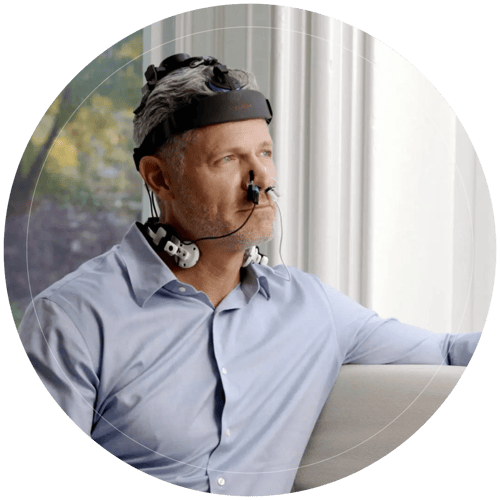
Photobiomodulation
Photobiomodulation uses low-level lasers to stimulate the brain and improve memory, cognitive function, and concentration.
Frequently Asked Questions
Neurofeedback represents the evolution of brain optimization, a scientifically-validated method that harnesses your brain's natural neuroplasticity to improve cognitive function. At Vital Brain Health, we've pioneered what we call Neurofeedback 3.0, representing an integrated multi-modal training approach that combines the best elements from all available methods and technologies.
Neurofeedback operates on the principle of operant conditioning combined with neuroplasticity, your brain's remarkable ability to reorganize and optimize itself throughout life. At Vital Brain Health, our Neurofeedback 3.0 protocols represent the most sophisticated application of this science, an integrated multi-modal approach that combines traditional methods with cutting-edge technologies including AI-based analysis, machine learning algorithms, network connectivity analysis, and adaptive protocols that evolve based on your individual progress and response patterns.
Vital Brain Health stands apart as Los Angeles' premier evidence-based neurofeedback center through our Neurofeedback 3.0 approach, an integrated multi-modal training system that represents a comprehensive meta-strategy pulling from many forms of analysis and neurofeedback tools. While other practices use basic single-method training, we strategically combine multiple analysis methods including AI-based analysis, network connectivity assessment, normative database comparisons, and symptom tracking to create the most personalized and effective training for each individual. When standard treatments and budget neurofeedback options have failed, discerning families and individuals choose us for results-driven, scientifically-validated training.
Yes. Neurofeedback is non-invasive and drug-free, which is one reason so many parents choose it after a concussion. Nothing enters your child's brain during a session: the sensors only read brain activity while the software provides gentle real-time feedback. Some children notice temporary tiredness after early sessions, and this typically fades as the brain settles into training.
Training is individualized, so there is no one-size-fits-all number. Many training plans run in the range of 30 to 40 sessions over several months, but the right plan for your child comes from the qEEG brain map and the initial evaluation. Your clinician will walk you through the recommended schedule before training begins.
Yes. Vital Brain Health runs nationwide remote programs with home training equipment and clinician oversight, so families outside the Los Angeles and Pasadena area can follow the same qEEG-guided approach without traveling to our office.
Enriquez-Geppert, Stefanie, et al. "The Morphology of Midcingulate Cortex Predicts Frontal-Midline Theta Neurofeedback Success." Frontiers in Human Neuroscience, vol. 7, 2013, pp. 1-10. Othmer, Siegfried, et al. "Implementation of Real-Time Digital Filtering in Neurofeedback." Journal of Neurotherapy, vol. 17, no. 1, 2013, pp. 5-18. Escolano, Carlos, et al. "EEG-Based Upper-Alpha Neurofeedback Training Improves Working Memory Performance." Proceedings of the Annual International Conference of the IEEE Engineering in Medicine and Biology Society, 2014, pp. 2327-2330. Marzbani, Hamed, et al. "Neurofeedback: A Comprehensive Review on System Design, Methodology and Clinical Applications." Basic and Clinical Neuroscience, vol. 7, no. 2, 2016, pp. 143-158. Bitbrain Technologies. "What is QEEG Brain Mapping & How to Interpret It."Bitbrain Blog, 30 Apr. 2025, www.bitbrain.com/blog/qeeg-brain-mapping. Thatcher, Robert W. "Validity and Reliability of Quantitative Electroencephalography." Journal of Neurotherapy, vol. 14, no. 2, 2010, pp. 122-152. Thatcher, Robert W., et al. "Quantitative EEG Analysis Methods and Clinical Applications." Artech House, 2009. Putman, Joel A., et al. "TOVA Results Following Interhemispheric Bipolar EEG Training." Journal of Neurotherapy, vol. 9, no. 1, 2005, pp. 37-52. Micoulaud-Franchi, Jean-Arthur, et al. "EEG Neurofeedback for Anxiety Disorders and Post-Traumatic Stress Disorders: A Blueprint for a Promising Brain-Based Therapy." Current Psychiatry Reports, vol. 23, no. 12, 2021, pp. 1-15.

Get the Neurofeedback You Need
Whether you're in the Los Angeles area or elsewhere in the United States, we can provide you the services you need.

Reach Out To Us
Professional Certifications