Concussions and traumatic brain injuries often leave no trace on a CT scan or MRI, yet the symptoms they cause can reshape daily life for months or even years. Persistent headaches, brain fog, memory problems, mood changes, sleep trouble, and sensitivity to light and noise are common long after the visible injury has healed. The encouraging news is that these lingering symptoms usually reflect disrupted brainwave patterns rather than permanent damage, and disrupted patterns can be retrained. This guide explains how neurofeedback supports concussion and TBI recovery and what a training program actually looks like.
How Does a Concussion Disrupt Brain Function?
A concussion disrupts the communication systems that connect different regions of your brain, often without leaving any visible mark on standard imaging. The injury is functional rather than purely structural, which is exactly why so many people feel unwell long after their scans come back clean. The damage lives in how brain regions talk to one another.
Think of your brain as a sophisticated mansion with many rooms: an executive office for decision-making, a memory library that stores experiences, an attention control room that manages focus, and emotional chambers that regulate mood. A concussion acts like an earthquake in this mansion. The structure may look intact from the outside, but the wiring between rooms has been shaken loose. When the executive office cannot coordinate with the attention control room, you get brain fog; when the emotional chambers become oversensitive, irritability and mood swings follow. Major health authorities note that a concussion is a form of traumatic brain injury caused by a bump, blow, or jolt to the head that makes the brain move rapidly back and forth, which is what scrambles these communication patterns.
These disruptions are measurable. Reviews of quantitative EEG findings in mild traumatic brain injury describe increased slow-wave activity in certain regions along with altered connectivity between networks that should work together seamlessly. Some people also show hyperarousal patterns that contribute to headaches, light sensitivity, and difficulty sleeping. Even a mild injury involves real physical change: the CDC explains that a mild TBI causes chemical changes and stretching of brain cells, precisely the kind of subtle dysfunction that never shows up on a structural scan.
Why Do Symptoms Linger After Scans Come Back Normal?
Symptoms linger because standard scans measure structure while concussion symptoms come from function. CT and MRI can rule out bleeding and fractures, but they say little about whether brain regions are firing and connecting the way they should.
That mismatch is well documented. A peer-reviewed EEG analysis of traumatic brain injury found that EEG can flag dysfunction in a large share of patients whose standard clinical exams looked normal. A clear scan does not mean nothing is wrong; it often means the wrong tool was used to look.
When functional disruption persists, clinicians call it post-concussion syndrome. According to the Mayo Clinic's overview of persistent post-concussive symptoms, these complaints often last longer than three months, and the Cleveland Clinic notes that symptoms can persist for weeks, months, or even more than a year.
Why Doesn't Rest Alone Resolve Post-Concussion Symptoms?
Rest is essential in the early days after a head injury, but it does not directly retrain the disrupted brainwave patterns that keep symptoms going. When symptoms outlast the expected recovery window, the issue is rarely a lack of rest.
Authoritative guidance confirms that mild TBI such as a concussion may need little beyond rest and over-the-counter pain relief at first, and national health resources acknowledge that while most people recover fully, recovery can take significant time and varies from person to person. Symptoms also evolve: the CDC notes that headaches and nausea may dominate early on, while emotional changes and sleep problems can surface a week or two later, which is why a static, one-size-fits-all plan so often falls short.
Conventional care can also lean heavily on symptom management. Pain medication can blunt headaches and stimulants may briefly sharpen attention, but neither helps the brain reestablish healthy communication between injured regions. Addressing the patterns behind persistent concussion symptoms in adults at the brainwave level is what changes the picture.
How Does Neurofeedback Retrain the Injured Brain?
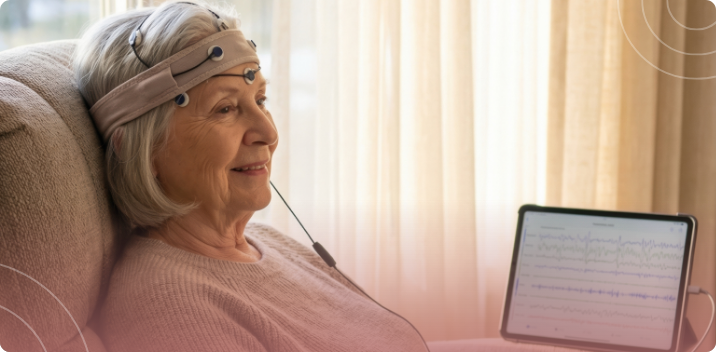
Neurofeedback teaches your brain to recognize and correct its own dysregulated electrical activity in real time, without medication or invasive procedures. Small sensors placed on the scalp read brainwave activity while a screen gives your brain immediate feedback on how it is performing. Nothing is ever sent into your brain; the sensors only read what is already happening.
A published overview of neurofeedback and biofeedback for traumatic brain injury describes neurofeedback as an operant conditioning treatment that lets users see their own brain activity and gradually shift it. When your brain produces healthier, more organized patterns, the feedback rewards it. When it slips back into injury-driven patterns, the feedback adjusts. Session by session, those small wins accumulate into self-regulation at a neurological level.
The engine behind this is neuroplasticity, the brain's lifelong capacity to rewire and form new connections after injury. A published literature review has also explored EEG neurofeedback as a treatment for the lingering symptoms that follow traumatic brain injury, reflecting growing clinical interest in retraining brain activity after trauma. Integrated approaches such as Neurofeedback 3.0 go further by combining several analysis methods, including AI-based analysis, network connectivity assessment, and normative database comparisons, then selecting from more than 20 training techniques so the protocol matches your specific post-injury patterns.
What Does qEEG Brain Mapping Reveal Before Training Begins?
Effective training starts with a 3D qEEG brain map, a detailed recording of your brain's electrical activity across many regions and frequency ranges. The map shows which areas are overactive, underactive, or poorly connected after your injury, turning vague symptoms into a measurable picture.
Research summarizing the diagnostic value of quantitative EEG describes how measures of frequency, power, and coherence help characterize brain activity. In practice, the picture is often surprisingly specific: visual processing areas that are not coordinating with balance centers can explain why busy environments make you dizzy, while irregular activity in frontal regions can account for irritability and trouble holding attention.
This blueprint matters because no two concussions disrupt the brain in exactly the same way. The Mayo Clinic notes that traumatic brain injury can produce wide-ranging physical and sensory effects that vary from person to person. A brain map lets your protocol target your actual dysregulation instead of a generic template, and revisiting it during training keeps the plan responsive as your brain changes.
Which Post-Injury Symptoms Can Brain Training Address?
Brain training is most often aimed at the four symptom clusters that follow a concussion: cognitive, physical, emotional, and sleep-related. Major clinical references note that concussion symptoms can affect physical, cognitive, emotional, and sleep functions, and each cluster reflects a different pattern of disrupted brain activity.
Cognitive challenges: Brain fog, memory problems, and slowed information processing are among the most frustrating aftereffects, especially for people trying to return to work or school. Protocols retrain the regions governing attention, recall, and processing speed.
Physical symptoms: Persistent headaches, dizziness, light and sound sensitivity, and balance problems tend to improve as the brain's electrical activity normalizes.
Emotional changes: Anxiety, low mood, irritability, and mood swings after a head injury are neurological disruptions rather than personal failings. Training helps recalibrate emotional processing networks toward steadier equilibrium.
Sleep disruption: Training supports healthy sleep-wake cycles by encouraging the brainwave frequencies that govern restorative sleep.
Early research is encouraging. Studies of people recovering from head injuries have linked this training to reduced excessive slow-wave activity and improved post-concussion symptom scores, and research on infra-low frequency neurofeedback has reported greater improvements in headache, memory, and brain fog. Larger controlled studies are still ongoing, so this training belongs inside a thoughtful medical recovery plan rather than replacing one.
What Do Sessions and the Recovery Timeline Look Like?
A neurofeedback session is calm, comfortable, and completely non-invasive, typically lasting 15 to 30 minutes. You sit while sensors read your brainwave activity and engage in activities that feel like simple interactive games, with your brain receiving instant feedback on its performance. There is no pain, no medication, and nothing entering the body, which matters a great deal when post-concussion fatigue and sensory sensitivity make everything else feel like work.
Most concussion recovery programs run about four months of regular sessions, with more significant or older injuries sometimes requiring longer. Consistency matters more than any single appointment because lasting change comes from repeated, spaced practice. Many people notice early improvements within the first several weeks: fewer or milder headaches, steadier focus, better sleep, and less sensitivity to light and noise. Starting within the first year after injury often produces the strongest results, yet the brain remains adaptable well beyond that window, and people have made meaningful progress on injuries sustained years earlier.
How Does Neurofeedback Fit With Other Concussion Care?
Neurofeedback complements standard concussion care rather than replacing it. Rest and graduated return-to-activity protocols manage risk while the brain heals; brain training adds an active layer that directly retrains the dysfunctional patterns causing persistent symptoms instead of leaving recovery to chance.
Many people combine training with physical therapy, occupational therapy, speech therapy, vestibular rehabilitation, or vision therapy, and a good provider coordinates with your neurologist or sports medicine physician so every part of the plan pulls in the same direction. For athletes the stakes are higher still: national neurological sources warn that repeated concussions raise the danger of long-term brain problems, which is why many pursue active recovery rather than another round of waiting. Always get evaluated and cleared by a physician after a head injury, and respect the return-to-play or return-to-work guidance you are given.
How Can You Get Started?
If you are ready to move from waiting to training, Vital Brain Health provides qEEG-guided neurofeedback for concussion and TBI recovery from our Pasadena, California office and through remote programs available nationwide. Every client begins with a 3D qEEG brain map that we review with you in person or by video call, and our PhD scientific advisors design protocols matched to your specific injury patterns. For clients who live far away or find travel hard while recovering, remote training uses our own hardware and software so every session stays guided and monitored from home.
Frequently Asked Questions
Can neurofeedback help if my concussion happened years ago?
Yes. Persistent symptoms often reflect ongoing electrical dysregulation rather than fixed damage, and the brain retains its capacity to form new connections throughout life. Starting within the first year after injury often brings faster results, but many people begin training months or years later and still work toward meaningful improvements.
Is neurofeedback safe after a traumatic brain injury?
Yes. The scalp sensors only read your existing brain activity; they never send signals or current into your brain. There is no medication, no surgery, and no recovery time after a session. Because protocols are built from your individual qEEG map, training is tailored to your injury rather than applied as a generic template.
How long does a concussion recovery program take?
Most programs run about four months of regular sessions, with more severe or older injuries sometimes requiring longer. Many people notice early changes, such as fewer headaches, steadier focus, and better sleep, within the first several weeks. Your brain map and your response to training shape the exact length.
Why do I need a qEEG brain map before training starts?
The brain map shows which regions are overactive, underactive, or poorly connected after your injury, even when a CT scan or MRI looks normal. Without it, training would be guesswork. With it, your protocol targets the specific patterns driving your symptoms, which is what makes the training precise and personalized.
Does neurofeedback replace rest and standard concussion care?
No. It works alongside the rest and graduated return-to-activity guidance your doctor provides, plus any physical, vestibular, or vision therapy you are receiving. Standard care manages risk while neurofeedback actively retrains the disrupted brainwave patterns, so the approaches complement rather than compete with each other.
Ready to take the next step?
Talk with the Vital Brain Health team about a Neurofeedback plan built around your brain and your goals.