
Neurofeedback for Oppositional Defiant Disorder in Los Angeles & Pasadena
Every child will have moments of defiance. These behaviors are a natural part of childhood and are usually no cause for concern. However, when defiance becomes persistent and coupled with vindictive behavior, it can be an indication of oppositional defiant disorder (ODD).
If you're looking for support to help your child improve their behavior problems, look no further than Vital Brain Health. We can provide support to help children overcome a variety of behavioral disorders with our effective support.
At a Glance
Neurofeedback at Vital Brain Health is drug-free, non-invasive brain training. We start with qEEG brain mapping, then use real-time feedback to help the brain regions tied to oppositional defiant disorder communicate and self-regulate, supporting calmer behavior, better focus, and steadier emotions.
What is Oppositional Defiant Disorder?
Oppositional defiant disorder is a condition characterized by an ongoing pattern of anger, arguing, defiance, and vindictive behavior towards parents and authority figures. ODD can affect a child's social skills as well as put strain on their relationships with family members.
At Vital Brain Health, we offer comprehensive therapy methods to help your child improve their behavior. Our support methods use the latest in neuroscience research to ensure we offer only the most advanced therapies possible.
We can help children struggling with a variety of conditions. Schedule an appointment with Vital Brain Health today.
Common Risk Factors Associated With Oppositional Defiant Disorder
There's currently no clear cause of ODD. Research is still being conducted and has identified two possible risk factors associated with the condition. Possible risk factors for oppositional defiance disorder are:
Genetics
A child's natural personality may make them more likely to develop ODD based on the way nerves in the brain function.
Environment
Parenting problems, including a lack of supervision, inconsistent discipline, harsh discipline, abuse, or neglect, may also play a part in the development of ODD.
Key takeaway
Persistent defiance and anger can signal oppositional defiant disorder. At Vital Brain Health, qEEG-guided neurofeedback offers a drug-free way to help your child improve behavior, focus, and emotional regulation.
What symptoms are associated with oppositional defiant disorder?
Because defiance often travels with attention struggles, many families also read our parent's guide to neurofeedback for ADHD in children while weighing their options. And if worry or big emotions seem to sit underneath the outbursts, our clinicians break down whether neurofeedback helps a child with anxiety in plain, practical terms.
What are the Support Options for Oppositional Defiant Disorder?
Vital Brain Health offers different types of support, each serving a different purpose. Some of the support options you may be recommended include:
Neurofeedback
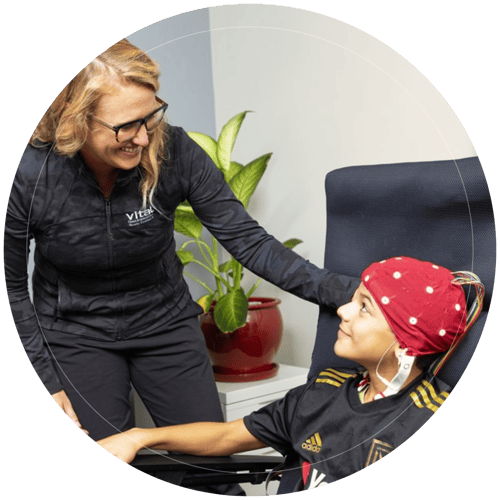
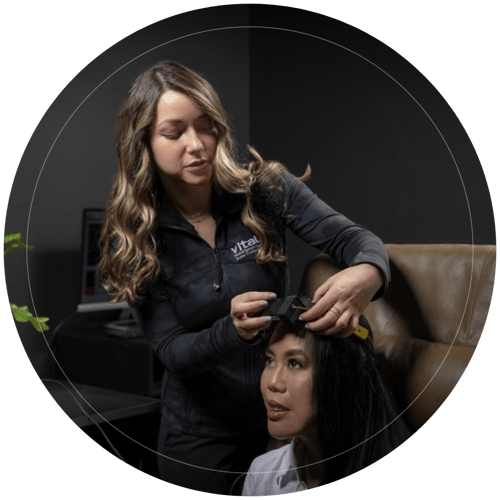
Neurofeedback utilizes advanced brain training to optimize your brain's natural function using real-time feedback. This can help the different parts of your brain communicate more effectively, which in turn improves focus, emotional regulation, and cognitive performance. Best of all, no part of this process requires medication.
Biofeedback
Biofeedback involves retraining involuntary brain activity common in conditions like ODD. This helps clients learn to control things like their breathing and heart rate, which can help calm turbulent emotions.
Frequently Asked Questions
Yes, neurofeedback can help children with conditions like ODD improve their behavior. Neurofeedback uses the principle of neuroplasticity to help retrain certain behaviors. The simple principle of neuroplasticity is: "Neurons that fire together, wire together." Our neurofeedback helps neurons in your target brain rooms fire together in synchronized frequencies while you train. As these rooms get rewarded for tuning to the same channel through our visual feedback system, they trigger new nerve connections that grow during sleep, particularly during REM sleep. As you progress through your training, we make the feedback criteria more challenging so that neurons in your target areas create even stronger neuroplastic connections, allowing them to stay synchronized longer and better over time.
Neurofeedback represents the evolution of brain optimization, a scientifically-validated method that harnesses your brain's natural neuroplasticity to improve cognitive function. At Vital Brain Health, we've pioneered what we call Neurofeedback 3.0, representing an integrated multi-modal training approach that combines the best elements from all available methods and technologies.
Neurofeedback operates on the principle of operant conditioning combined with neuroplasticity, your brain's remarkable ability to reorganize and optimize itself throughout life. At Vital Brain Health, our Neurofeedback 3.0 protocols represent the most sophisticated application of this science: an integrated multi-modal approach that combines traditional methods with cutting-edge technologies including AI-based analysis, machine learning algorithms, network connectivity analysis, and adaptive protocols that evolve based on your individual progress and response patterns.
Training is individualized, so there is no single number that fits every child. The plan is built from your child's qEEG brain map, and many training plans run in the range of 30 to 40 sessions over several months. Your child's exact plan comes from the initial evaluation, where our team reviews the map with you and outlines a realistic schedule for your family.
Yes. Alongside our Pasadena office, Vital Brain Health runs nationwide remote programs with home training equipment and clinician oversight. Families outside Southern California can complete training from home while our team monitors progress and adjusts the plan along the way.
Our 3D qEEG brain mapping shows which of your child's brain networks are overactive and which are underactive. That map lets us target training to your child's specific brain instead of running a generic protocol, so sessions focus on the patterns tied to defiance, irritability, and emotional reactivity.
Enriquez-Geppert, Stefanie, et al. "The Morphology of Midcingulate Cortex Predicts Frontal-Midline Theta Neurofeedback Success." Frontiers in Human Neuroscience, vol. 7, 2013, pp. 1-10. Gruzelier, John H. "EEG-Neurofeedback for Optimising Performance. I: A Review of Cognitive and Affective Outcome in Healthy Participants." Neuroscience & Biobehavioral Reviews, vol. 44, 2014, pp. 124-141. Ros, Tomas, et al. "Consensus on the Reporting and Experimental Design of Clinical and Cognitive-Behavioural Neurofeedback Studies (CRED-nf Checklist)." Brain, vol. 143, no. 6, 2020, pp. 1674-1685. Micoulaud-Franchi, Jean-Arthur, et al. "Electroencephalographic Neurofeedback: Level of Evidence in Mental and Brain Disorders and Suggestions for Good Clinical Practice." Neurophysiologie Clinique, vol. 45, no. 6, 2015, pp. 423-433. Escolano, Carlos, et al. "EEG-Based Upper-Alpha Neurofeedback Training Improves Working Memory Performance." Proceedings of the Annual International Conference of the IEEE Engineering in Medicine and Biology Society, 2014, pp. 2327-2330. Vernon, David J. "Can Neurofeedback Training Enhance Performance? An Evaluation of the Evidence with Implications for Future Research." Applied Psychology, vol. 54, no. 3, 2005, pp. 385-404.

Get the Neurofeedback You Need
Whether you're in the Los Angeles area or elsewhere in the United States, we can provide you the services you need.

Reach Out To Us

Professional Certifications