Neurofeedback for Autism in Los Angeles & Pasadena
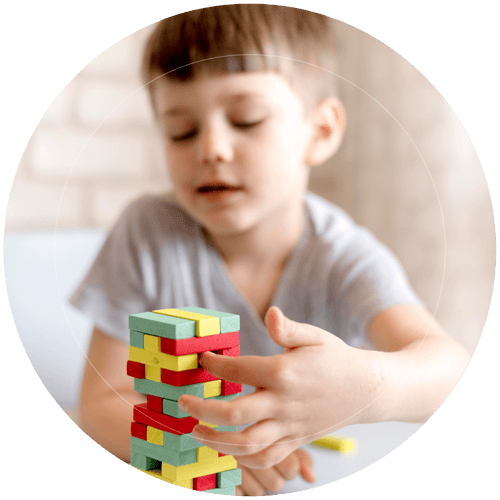
Autism spectrum disorder is a complex neurodevelopmental condition that affects many children. It can impact a child's development and lead to sensory processing differences, difficulty with coping skills, struggles with motor skills, and make social interactions more difficult.
Help your child succeed with comprehensive care in a supportive environment. Schedule an appointment with Vital Brain Health today.
At a Glance
Neurofeedback is drug-free, non-invasive brain training. At Vital Brain Health we start with qEEG brain mapping, then use real-time feedback to help brain regions communicate more effectively. For autism, this supports better social interaction, sensory comfort, emotional regulation, and focus, with no medication required.
What is Autism Spectrum Disorder?
Autism spectrum disorder is a condition that relates to how the brain develops. This can make it difficult for neurodivergent children to develop limited or repeated patterns of behavior. It can also impact their social skills, making it difficult for them to form deeper connections and social relationships. The condition presents a wide range of symptoms and severity of those symptoms.
At Vital Brain Health, we are dedicated to providing guidance to parents and helping their children tackle their unique challenges. We provide personalized care and have extensive experience working with neurodivergent individuals. If you’re looking for a way to support your child and help them navigate the world a little easier, schedule an appointment with Vital Brain Health today.
Common Risk Factors Associated With Autism and Neurodivergence
Autism is a complex condition that currently has no one single identifiable cause. Some of the factors that are currently believed to contribute to the development of autism in children include:
Genetics
There have been several genes linked to the development of autism. For some children, the genetic conditions Rett syndrome or fragile X syndrome have been identified as probable causes. In other children, there are possible genetic mutations that may have contributed to the development of autism.
Environmental Factors
Some research has shown a link between some viral infections, complications during pregnancy, and air pollutants, and autism spectrum disorder.
Key takeaway
Autism is a brain-based condition, and Vital Brain Health helps children navigate it with personalized, drug-free neurofeedback guided by qEEG brain mapping. Our autism-specific Neurofeedback 3.0 protocols target the exact brain patterns affected, supporting calmer, more connected day-to-day life.
What symptoms are associated with autism?
If you are still researching before booking, our clinicians wrote a plain-English guide to what a qEEG brain map actually shows, including how it pinpoints the brain networks involved in autism. Many parents also find it reassuring to understand how long neurofeedback takes to work before their child's first session, so the pace of progress never comes as a surprise.
What are the Support Options for Autism?
Vital Brain Health offers different types of support, each serving a different purpose. Some of the support you may be recommended include:
Neurofeedback
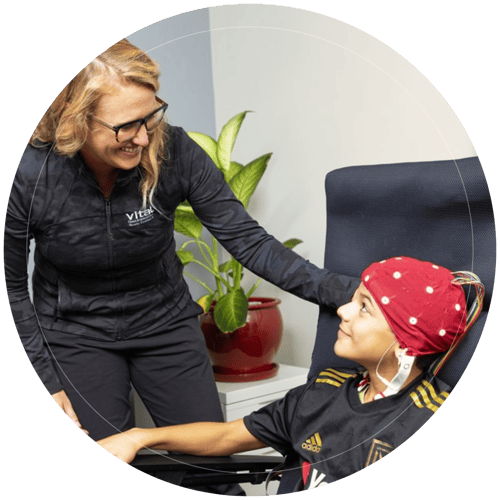
Neurofeedback utilizes advanced brain training to optimize your brain’s natural function using real-time feedback. This can help the different parts of your brain communicate more effectively, which in turn improves focus, emotional regulation, and cognitive performance. Best of all, no part of this process requires medication.
Biofeedback
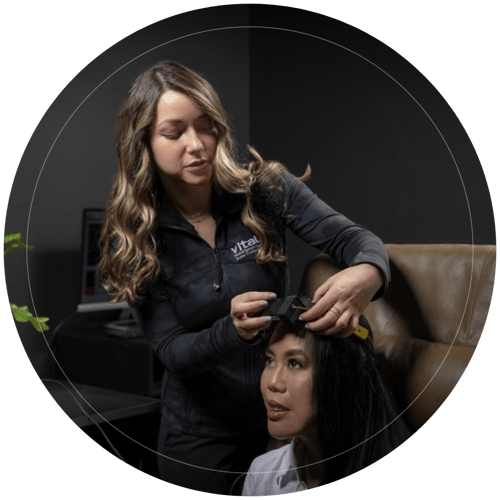
Biofeedback involves exercises to control involuntary bodily actions like breathing and the speed of your heart rate. This can be helpful in supporting care for anxiety and other behavioral conditions that can trigger anxiety or similar symptoms.
Frequently Asked Questions
Yes, we specialize in supporting people with autism spectrum disorder using advanced approaches that set us apart from other providers. We have developed specialized software analysis, hardware tools, and protocols specifically designed for helping individuals with autism spectrum differences, with development contributions from our PhD scientific advisor Robert Coben, PhD, who helped develop both our analysis methods and protocol tools for people with autism. All of our protocols for supporting people with autism are based on published research.
Our specialized protocols for people with autism use Neurofeedback 3.0 integrated multi-modal training to help optimize brain communication patterns often affected in individuals with autism spectrum disorder. We target specific "rooms" in the brain mansion that handle social communication, sensory processing, and emotional regulation for people with autism. Our autism-specific software, hardware, and protocols help these brain areas coordinate more effectively, leading to improvements in social interaction, sensory integration, and emotional control for individuals with autism.
Our autism-specific Neurofeedback 3.0 protocols target these exact patterns in individuals with autism spectrum disorder: • Social Communication Optimization for People with Autism: We help brain areas responsible for social understanding learn to coordinate more effectively in individuals with autism, supporting improved social awareness and communication abilities for people with autism spectrum differences. • Sensory Integration Training for People with Autism: Our protocols help sensory processing rooms learn to modulate their "volume" appropriately in individuals with autism, reducing sensory overwhelm and improving tolerance for various environments for people with sensory processing challenges. • Emotional Regulation Enhancement for People with Autism: We train emotional processing areas to communicate more effectively with executive function regions in individuals with autism, supporting better emotional control and self-regulation for people with autism spectrum disorder. • Attention Network Coordination for People with Autism: Our training helps attention systems become more flexible in switching between different focus modes and communication channels in individuals with autism.
Every child's training plan is individualized from their qEEG brain map, so there is no single number that fits everyone. Many training plans run in the range of 30 to 40 sessions over several months. The exact plan for your child comes from the initial evaluation, where we review the brain map together and map out what training would look like.
Neurofeedback is non-invasive and drug-free. Nothing enters the brain during a session: the sensors only read your child's brain activity while the software provides real-time feedback. Some children notice temporary tiredness after early sessions as the brain adjusts to training. Because no medication is involved, many families choose neurofeedback specifically to avoid drug-related side effects.
Yes. Vital Brain Health runs nationwide remote programs with home training equipment and clinician oversight, so your child can train from your living room while our team monitors progress and adjusts protocols. Families outside the Los Angeles and Pasadena area receive the same qEEG-guided, individualized approach as in-office clients.
Gruzelier, John H. "EEG-Neurofeedback for Optimising Performance. I: A Review of Cognitive and Affective Outcome in Healthy Participants." Neuroscience & Biobehavioral Reviews, vol. 44, 2014, pp. 124-141. Ros, Tomas, et al. "Consensus on the Reporting and Experimental Design of Clinical and Cognitive-Behavioural Neurofeedback Studies (CRED-nf Checklist)." Brain, vol. 143, no. 6, 2020, pp. 1674-1685. Kouijzer, Mirjam E. J., et al. "Long-Term Effects of Neurofeedback Treatment in Autism." Research in Autism Spectrum Disorders, vol. 7, no. 4, 2013, pp. 496-501. Micoulaud-Franchi, Jean-Arthur, et al. "Electroencephalographic Neurofeedback: Level of Evidence in Mental and Brain Disorders and Suggestions for Good Clinical Practice." Neurophysiologie Clinique, vol. 45, no. 6, 2015, pp. 423-433. Coben, Robert, et al. "Using Quantitative and Analytic EEG Methods in the Understanding of Connectivity in Autism Spectrum Disorders: A Theory of Mixed Over- and Under-Connectivity." Frontiers in Human Neuroscience, vol. 8, 2014, pp. 1-15. Coben, Robert, and Ilean Padolsky. "Assessment-Guided Neurofeedback for Autistic Spectrum Disorder." Journal of Neurotherapy, vol. 11, no. 1, 2007, pp. 5-23. Kouijzer, Mirjam E. J., et al. "Long-Term Effects of Neurofeedback Treatment in Autism." Research in Autism Spectrum Disorders, vol. 7, no. 4, 2013, pp. 496-501. Coben, Robert, et al. "Connectivity-Guided EEG Biofeedback for Autism Spectrum Disorder: Evidence of Neurophysiological Changes." Journal of NeuroRegulation, vol. 1, no. 2, 2014, pp. 109-130. Coben, Robert, and Timothy E. Myers. "The Relative Efficacy of Connectivity Guided and Symptom Based EEG Biofeedback for Autistic Disorders." Applied Psychophysiology & Biofeedback, vol. 35, no. 1, 2010, pp. 13-23. Friedrich, Elisabeth V. C., et al. "An Effective Neurofeedback Intervention to Improve Social Interactions in Children with Autism Spectrum Disorder." Journal of Autism and Developmental Disorders, vol. 45, no. 12, 2015, pp. 4084-4098.

Get the Neurofeedback You Need
Whether you're in the Los Angeles area or elsewhere in the United States, we can provide you the services you need.

Reach Out To Us

Professional Certifications