
Neurofeedback for Pathological Demand Avoidance in Los Angeles & Pasadena
All children try to avoid doing what they're told from time to time. However, when a child goes to extremes to avoid having to do what they're told, it can be a sign of pathological demand avoidance (PDA) in children. This neurodevelopmental condition can range from children seeking distractions to having panic attacks.
PDA can be a complex condition that puts strain on autistic children and their family members. If your child has shown symptoms of PDA, you need the help of a neurofeedback specialist who can identify and provide support for the condition.
Schedule an appointment for PDA support today and get your child the tools they need to succeed.
At a Glance
Neurofeedback is a drug-free, non-invasive brain-training method. At Vital Brain Health we use qEEG brain mapping and real-time feedback to help the brain regions tied to pathological demand avoidance regulate intensity, easing demand-driven anxiety and building steadier emotional control for children and adults.
What is Pathological Demand Avoidance?
Pathological demand avoidance (PDA) is a condition where children feel overwhelmed when told what to do, even if what they're told is a normal part of their daily life or directly beneficial to them. This leads to affected children developing pathological avoidance techniques and, in some cases, even suffering panic attacks when asked to do something. PDA is also common in neurodivergent children or children who are on the autism spectrum.
At Vital Brain Health, we are dedicated to using our advanced technology to meet the unique demands of our clients. We can help children, young adults, and adults improve conditions ranging from depression and PDA to a variety of learning disabilities. We avoid unnecessary medications and procedures with our approach while still providing you optimal support.
Schedule an appointment with Vital Brain Health today. Our staff is ready to help your child get the support they need to thrive.
Common Risk Factors Associated with Pathological Demand Avoidance
Understanding the risk factors commonly associated with pathological demand avoidance can help you get the support your child needs. PDA is often associated with the following risk factors:
Anxiety
Severe cases of anxiety can make performing even simple tasks overwhelming for children with PDA. This leads to them developing avoidance techniques and suffering from panic attacks.
Autism
Children on the autism spectrum have more inflexible thinking, which can cause demands placed on them to seem sudden and overwhelming. This can lead to the development of PDA as well.
Developmental Disorders
Various developmental disorders can make it more difficult for a child to cope with demand and instructions they are given, leading to PDA.
Key takeaway
Pathological demand avoidance does not have to control your child's day. Our qEEG-guided neurofeedback gently retrains the brain patterns behind demand-driven anxiety, drug-free and personalized to each person.
What symptoms are associated with pathological demand avoidance?
Because demand-driven anxiety sits at the heart of PDA, many parents start by reading whether neurofeedback helps a child with anxiety, which walks through what brain training looks like for an anxious child. If focus and attention struggles are part of your child's picture as well, our parent's guide to neurofeedback for ADHD in children explains how training supports steadier attention and self-regulation at home and in the classroom.
Because PDA and ADHD are so often confused, our guide to how PDA and ADHD overlap and differ breaks down the difference in plain terms, and our practical guide to PDA therapy and support options covers what helps at home, in therapy, and at school, including the honest answer on medication.
What are the Support Options for Pathological Demand Avoidance?
Vital Brain Health offers different types of support, each serving a different purpose. Some of the support options you may be recommended include:
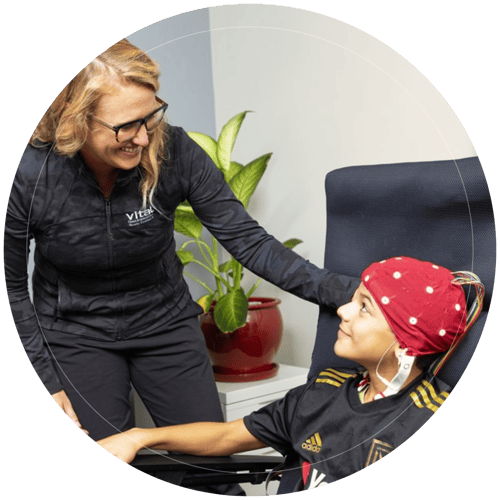
Neurofeedback
Neurofeedback utilizes advanced brain training to optimize your brain’s natural function using real-time feedback. This can help the different parts of your brain communicate more effectively, which in turn improves focus, emotional regulation, and cognitive performance. Best of all, no part of this process requires medication.
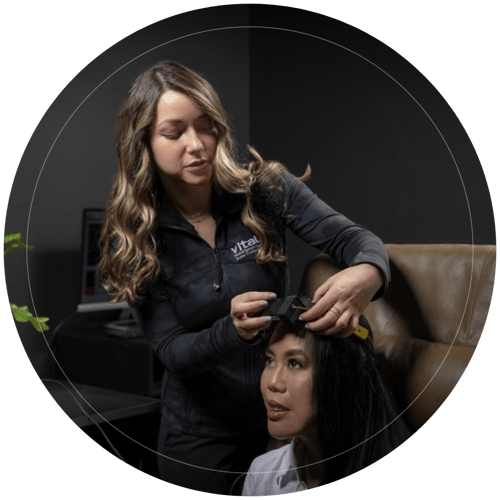
Biofeedback
Biofeedback helps control certain functions of the body, such as breathing and muscle responses, in order to control conditions such as anxiety.
Frequently Asked Questions
Our support for people with PDA addresses the specific brain communication patterns that create and maintain the behaviors commonly associated with the condition, helping individuals experiencing PDA develop more balanced emotional regulation and behavioral management capabilities. We help processing areas learn to modulate their intensity and communicate more appropriately with cognitive control systems in individuals with PDA.
Our Neurofeedback 3.0 represents a comprehensive meta-strategy that strategically combines multiple analysis methods, including AI-based analysis, network connectivity assessment, normative database comparisons, and symptom tracking, to create a complete picture of each client's unique brain patterns. We then strategically select from over 20 different neurofeedback techniques to design truly personalized protocols. Our Neurofeedback 3.0 approach helps clients of all ages get the support they need when teaching their brains to optimize communication systems.
Vital Brain Health stands apart as Los Angeles' premier evidence-based neurofeedback center through our Neurofeedback 3.0 approach: an integrated multi-modal training system that represents a comprehensive meta-strategy pulling from many forms of analysis and neurofeedback tools. While other practices use basic single-method training, we strategically combine multiple analysis methods including AI-based analysis, network connectivity assessment, normative database comparisons, and symptom tracking to create the most personalized and effective training for each individual. When standard treatments and budget neurofeedback options have failed, discerning families and individuals choose us for results-driven, scientifically-validated training.
Neurofeedback is non-invasive and drug-free. Nothing enters the brain at any point: the sensors placed on the scalp only read your child's brain activity while the system provides real-time feedback. Some people notice temporary tiredness after early sessions, and your clinician monitors how your child responds and adjusts the training as needed.
No. There is no medication for PDA itself, and no drug is approved to treat it. When medication comes up, it targets co-occurring conditions such as significant anxiety or ADHD symptoms, and that decision belongs with your prescribing physician. The core of PDA support is lowering demand pressure and strengthening self-regulation, which is why our approach is drug-free by design. Our guide to PDA therapy and support options walks through what actually helps.
Yes. In addition to our Pasadena office, Vital Brain Health runs nationwide remote programs with home training equipment and clinician oversight. For many children with PDA, training in a familiar setting at home can feel less like a demand, and your care team guides every step from a distance.
Before training begins, 3D qEEG brain mapping shows us which of your child's brain networks are over-active or under-active. That map lets us target this brain, not a generic protocol, so the training plan reflects the specific patterns behind your child's demand-driven anxiety and avoidance.
Enriquez-Geppert, Stefanie, et al. "The Morphology of Midcingulate Cortex Predicts Frontal-Midline Theta Neurofeedback Success." Frontiers in Human Neuroscience, vol. 7, 2013, pp. 1-10. Gruzelier, John H. "EEG-Neurofeedback for Optimising Performance. I: A Review of Cognitive and Affective Outcome in Healthy Participants." Neuroscience & Biobehavioral Reviews, vol. 44, 2014, pp. 124-141. Ros, Tomas, et al. "Consensus on the Reporting and Experimental Design of Clinical and Cognitive-Behavioural Neurofeedback Studies (CRED-nf Checklist)." Brain, vol. 143, no. 6, 2020, pp. 1674-1685. Micoulaud-Franchi, Jean-Arthur, et al. "Electroencephalographic Neurofeedback: Level of Evidence in Mental and Brain Disorders and Suggestions for Good Clinical Practice." Neurophysiologie Clinique, vol. 45, no. 6, 2015, pp. 423-433. Escolano, Carlos, et al. "EEG-Based Upper-Alpha Neurofeedback Training Improves Working Memory Performance." Proceedings of the Annual International Conference of the IEEE Engineering in Medicine and Biology Society, 2014, pp. 2327-2330. Vernon, David J. "Can Neurofeedback Training Enhance Performance? An Evaluation of the Evidence with Implications for Future Research." Applied Psychology, vol. 54, no. 3, 2005, pp. 385-404.

Get the Neurofeedback You Need
Whether you're in the Los Angeles area or elsewhere in the United States, we can provide you the services you need.

Reach Out To Us

Professional Certifications