Dealing with concussion symptoms that won't go away? For countless Los Angeles residents and athletes, the aftermath of a concussion extends far beyond the initial injury. Headaches that won't quit, mental cloudiness, heightened sensitivity to everyday stimuli, and compromised focus can persist for months. According to the Mayo Clinic's overview of persistent post-concussive symptoms, these complaints often last longer than three months after the original injury. They point to post-concussion syndrome, a condition rooted in altered brainwave activity that targeted biofeedback therapy in Los Angeles can help correct.
Why Do Concussion Symptoms Last So Long After the Hit?
Concussion symptoms linger because the injury changes how your brain communicates, not just where it hurts. A concussion is a mild traumatic brain injury that disrupts the timing and synchronization of brainwave activity, so even after bruises heal, the underlying electrical patterns stay disorganized. That ongoing dysregulation keeps producing headaches, fog, and fatigue.
Beyond immediate disorientation and pain, concussions fundamentally alter how your brain processes information. Your brain functions through an intricate network of specialized regions, 19 distinct areas that each manage specific cognitive tasks including memory storage, focus maintenance, emotional responses, and visual-motor coordination. These regions rely on neural communication networks operating across five distinct frequency bands.
Concussive force throws this sophisticated system into disarray. Previously synchronized brain regions suddenly operate on different wavelengths. Some areas may shift into excessive slow-frequency patterns while others generate too much high-frequency activity. As the National Institute of Neurological Disorders and Stroke explains about concussion and traumatic brain injury, even a single jolt to the head can trigger physical, cognitive, and emotional symptoms. This communication breakdown directly causes the varied symptoms that define post-concussion syndrome.
Athletes across Los Angeles, whether training at USC, competing in local high school programs, or participating in weekend recreational leagues, find these neurological disruptions especially challenging. You might feel physically capable of returning to competition, yet notice delayed reactions, compromised split-second decisions, or unexplained mood changes. These experiences reflect measurable dysfunction rather than personal limitations, and brain-training feedback for concussion recovery provides a pathway toward resolution.
How Does Biofeedback Help the Brain Recover From a Concussion?
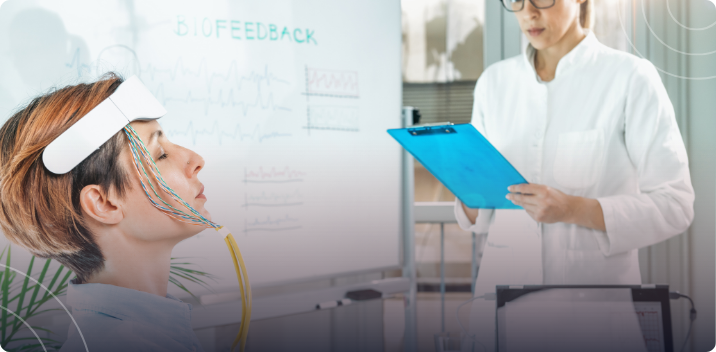
Biofeedback helps by showing you your own physiological signals in real time so you can learn to steer them toward healthier patterns. Specialized equipment monitors your brain activity, heart rhythm, and other responses, then displays that data instantly. With practice, your nervous system gradually relearns the balanced patterns a concussion knocked out of sync.
As the Cleveland Clinic describes biofeedback, it is a noninvasive, drug-free approach that teaches you to influence functions you normally cannot control on purpose. That makes it a natural fit after a concussion, when medication often dulls symptoms without rebuilding the underlying timing your brain lost.
Neurofeedback, a specific biofeedback modality, focuses directly on retraining irregular brainwave activity. A published overview of neurofeedback and biofeedback for traumatic brain injury describes it as an operant conditioning treatment that lets users see their own brain activity and gradually shift it. After brain mapping identifies the precise frequency disturbances created by your concussion, neurofeedback in Los Angeles delivers customized training protocols to normalize these patterns. Your brain receives instant reinforcement when generating optimal activity, gradually strengthening these healthier patterns through neuroplastic adaptation.
Various approaches target different post-concussion complications. Chronic headache sufferers benefit from identifying tension patterns and blood flow responses that trigger pain episodes. Cognitive issues including mental fog and attention deficits respond to training that targets brainwave frequencies linked to mental clarity. Emotional symptoms like heightened anxiety and irritability improve through training that helps emotional processing centers respond proportionally to daily challenges.
What Happens During qEEG Brain Mapping for Post-Concussion Syndrome?
A qEEG brain map records your brain's electrical activity across many locations and frequency ranges, then compares the results to typical patterns to pinpoint exactly where your concussion disrupted communication. It turns vague symptoms into a measurable picture, which is what makes individualized treatment possible rather than guesswork.
Beginning brain-training for concussion recovery starts with this detailed assessment. Since every concussion creates a unique pattern of dysfunction, individualized protocols based on your specific qEEG brain mapping results prove essential for optimal outcomes.
The qEEG assessment captures electrical activity patterns across numerous brain locations and frequency ranges. This comprehensive analysis reveals precisely where inter-regional communication has deteriorated. Perhaps visual processing centers aren't synchronizing properly with vestibular systems, creating dizziness in stimulating environments. Or frontal lobe regions may show dysregulated patterns, explaining concentration difficulties and mood instability.
How Long Does Biofeedback Treatment for a Concussion Take?
Treatment for post-concussion syndrome typically requires roughly a four-month commitment with consistent sessions. That timeline reflects how the brain learns: repeated, spaced practice is what allows new neural patterns to stabilize, so steady attendance matters more than any single appointment.
These appointments involve actively practicing control over your brain's responses while monitoring real-time feedback on your progress. This training helps your brain reacquire the coordination and timing patterns disrupted by injury. Gradually, different brain regions reestablish effective communication, and neural pathways strained by concussive force begin strengthening and reorganizing themselves. Many people pair this work with the recovery options outlined on the adult concussion recovery page so they understand the full picture before committing.
How Is This Different From Standard Concussion Care for LA Athletes?
Standard concussion care emphasizes rest and a graduated return to activity, which manages risk but waits for the brain to heal on its own. Biofeedback adds an active layer: it directly retrains the dysfunctional patterns causing persistent symptoms instead of leaving recovery to chance.
USC sports medicine departments and regional concussion specialists typically focus on physical rest and return-to-play protocols. While these approaches remain important, they don't directly retrain the disorganized brain patterns driving lingering symptoms. A structured drug-free brain-training protocol enhances traditional concussion management by actively rehabilitating function rather than passively waiting for spontaneous recovery.
For recreational athletes in LA's adult sports communities or high school competitors in the region's demanding athletic programs, this approach offers active participation in your healing process while maintaining appropriate recovery timelines. Rather than passively enduring symptoms while sidelined, you're engaging in focused rehabilitation that supports functional restoration.
Getting Back to the Life You Want After a Concussion
Brain-training optimizes performance to help you resume normal activities, whether competitive athletics, professional responsibilities, or family life free from constant pain and exhaustion. The improvements developed through this work tend to provide lasting brain-health benefits that extend beyond immediate symptom relief.
Struggling with ongoing post-concussion symptoms? A thorough qEEG brain mapping assessment reveals exactly how your concussion disrupted neurological communication patterns, enabling informed decisions about your rehabilitation approach and the right combination of neurofeedback and biofeedback for your specific brain map.
Frequently Asked Questions
Is biofeedback for post-concussion syndrome safe?
Yes. Biofeedback is noninvasive and drug-free, using sensors only to read and display your physiological signals rather than to stimulate the brain. The Cleveland Clinic notes it carries no significant risks for most people. Always share your full concussion history with your provider so the plan fits your situation.
How soon after a concussion can I start biofeedback?
Many people begin once acute symptoms have stabilized and they have been cleared by their treating physician. Because post-concussion symptoms often emerge within the first week or two and can persist for months, starting structured brain-training while symptoms linger is common. A qEEG brain map at intake confirms whether you are a good candidate.
Does biofeedback replace rest and standard concussion care?
No. It works alongside the rest and graduated return-to-activity guidance your doctor provides. Standard care manages risk while biofeedback actively retrains the disrupted brainwave patterns, so the two approaches complement rather than compete with each other.
How many sessions will I need for post-concussion recovery?
Most plans run about four months with consistent, regularly scheduled sessions. The exact number depends on your qEEG findings, the severity of the disruption, and how your brain responds. Steady attendance matters because lasting change comes from repeated, spaced practice over time.
Can biofeedback help with concussion headaches and brain fog specifically?
Yes, these are among the most common reasons people seek it out. Training can target the tension and blood-flow patterns linked to headaches and the brainwave frequencies tied to mental clarity. Results vary by person, which is why each protocol is built from your individual brain map.
Ready to take the next step?
Talk with the Vital Brain Health team about a Biofeedback plan built around your brain and your goals.