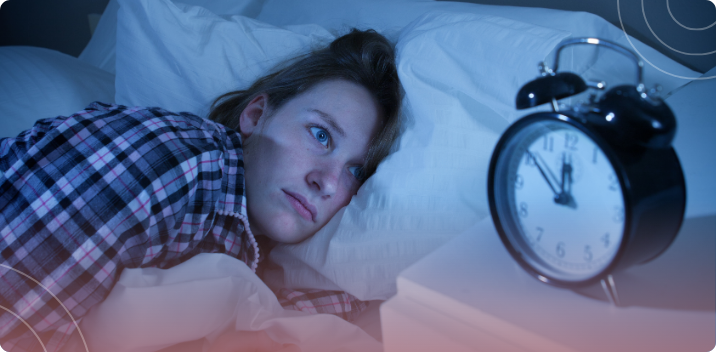
Sleep problems affect thousands of Los Angeles adults every night. If you find yourself awake at 2 AM with racing thoughts, struggling to fall asleep despite exhaustion, or waking up feeling unrested, you are dealing with more than simple restlessness. Insufficient sleep is widespread, and federal sleep surveillance data show that a large share of American adults regularly fail to get the seven or more hours they need. These sleep disturbances often stem from specific brainwave patterns, and biofeedback training for sleep disorders can help you change them.
Why Won't Your Brain Let You Sleep?
Your brain will not let you sleep when it stays locked in a high-alert state and its electrical rhythms fall out of balance. Sleep is governed by patterns of brain activity and a natural sleep-wake cycle, so when those signals stay activated at night, falling and staying asleep becomes a nightly battle rather than a smooth transition.
This is not about willpower or trying harder. According to the NINDS overview of how the brain produces sleep, sleep depends on coordinated electrical activity and a body clock that signals when to wind down and when to wake. Different brainwave frequencies manage stress responses, relaxation systems, and that internal clock. When these frequencies become imbalanced, or your brain stays in hypervigilant mode, sleep problems develop and tend to repeat night after night.
For many LA adults, chronic stress, long commutes, late-night screen time, and constant connectivity train the brain to remain alert even during rest hours. Over time, your brain learns to stay activated when it should be powering down, and that learned pattern is exactly what targeted training can address.
How Does Biofeedback Retrain Your Sleep Response?
Biofeedback retrains your sleep response by showing you your own body signals in real time so you can learn to calm them on purpose. Sensors track functions like heart rate, breathing, and muscle tension while you practice relaxing, and that immediate feedback teaches your nervous system to shift out of fight-or-flight and into the calm state that allows restorative sleep.
As the Mayo Clinic explanation of biofeedback describes, the technique uses sensors to monitor body functions such as breathing, brain waves, heart rate, and muscle activity, then feeds that information back to you so you can learn to control responses that usually feel automatic. During sessions you start to recognize the physical tension and mental loops that block sleep, and more importantly, you discover how to release them.
Neurofeedback is a specialized form of this approach that focuses specifically on brainwave retraining. If a brain map reveals excessive fast beta activity in the evening, neurofeedback in Los Angeles helps your brain produce more of the slower alpha and theta waves that support relaxation and the natural slide into sleep.
What Makes Sleeping Harder in Los Angeles?
Los Angeles creates unique obstacles to healthy sleep patterns. Many adults spend one to two hours commuting, arriving home physically tense and mentally stressed before they ever think about rest. The entertainment and tech industries reward late-night emails and irregular schedules, and professionals across West LA and Santa Monica often describe being unable to shift out of problem-solving mode after high-pressure workdays.
Biofeedback training does not eliminate these stressors, and no honest program would promise that. Instead, it gives you practical tools to process pressure more effectively so it stops interfering with your body's natural rest cycles. The goal is a nervous system that recovers quickly, even in a demanding city.
How Does the Biofeedback Training Process Work?
The biofeedback training process starts with a detailed brain assessment, then moves into repeated practice sessions where you learn to steer your brain toward calmer, sleep-supporting states. Each step builds on real measurements of your own activity rather than guesswork, so the training targets the patterns that are actually keeping you awake.
Your journey begins with comprehensive qEEG brain mapping, the first step in a structured drug-free brain training program. This non-invasive assessment measures your brain's electrical activity and creates a detailed picture of your brainwave patterns. The map identifies where your activity deviates from optimal sleep-supporting rhythms, such as excessive beta activity during evening hours when slower waves should take over, or stress-response centers that activate too easily when calm should dominate.
Training programs typically involve a multi-month commitment with regular sessions. During each session you practice controlling your brain's responses while receiving immediate feedback, and when your brain reaches patterns associated with relaxation and sleep readiness, you see it happening on screen. Over weeks and months, your brain learns to reach these beneficial states more easily and hold them longer. As the Cleveland Clinic guide to biofeedback notes, this is a non-invasive approach that usually requires multiple sessions plus regular at-home practice to produce durable change.
What Results Can You Expect From Biofeedback Training?
Biofeedback rewards consistent practice, and most adults notice early shifts within the first few weeks. You may fall asleep faster, wake less often during the night, or feel more rested in the morning. These are gradual, individual changes rather than overnight cures, and progress depends on staying engaged with the program.
Because biofeedback encourages lasting neural change, benefits often continue after the formal program ends. Research on heart rate variability biofeedback and sleep quality found that several weeks of slow-breathing biofeedback improved participants' reported sleep quality and boosted calming parasympathetic activity. Unlike sleep medications that only work while you take them, the self-regulation skills built through biofeedback can keep supporting your sleep-wake balance well after training.
Is Biofeedback Right for Your Sleep Concerns?
Biofeedback may be a strong fit if your sleep problems are tied to stress, a racing mind, and an over-activated nervous system rather than an untreated medical condition. It is non-invasive, drug-free, and well suited to people who want to address the root patterns behind poor sleep instead of masking symptoms.
A thorough assessment, including qEEG brain mapping, reveals the specific patterns interfering with your rest and clarifies whether this drug-free approach matches your needs. For ongoing insomnia relief, many people pair biofeedback with simple sleep-hygiene changes so the brain training has the best possible environment to take hold. If a sleep disorder, sleep apnea, or another medical issue is suspected, an evaluation by a qualified clinician should come first.
Frequently Asked Questions
Is biofeedback training safe for sleep problems?
Biofeedback is non-invasive and drug-free, and it is widely regarded as low-risk because it only monitors signals your body already produces. It does not introduce anything into the body and has no medication side effects. Anyone with a diagnosed sleep or medical condition should still review the approach with a qualified clinician first.
How long before biofeedback improves my sleep?
Most adults notice early changes within the first few weeks of consistent sessions, such as falling asleep faster or waking less often. Deeper, more durable improvement usually develops over a multi-month program. Results vary from person to person and depend on regular practice between visits.
Is biofeedback the same as neurofeedback?
Neurofeedback is a specialized type of biofeedback. General biofeedback tracks signals like heart rate, breathing, and muscle tension, while neurofeedback focuses specifically on brainwave activity. For sleep concerns, the two are often combined so both your nervous system and your brain rhythms get attention.
Do the benefits of biofeedback last after training ends?
Often, yes. Because biofeedback builds self-regulation skills and encourages lasting neural change, many people maintain better sleep after completing a program. This differs from sleep medications, which generally only work while you are taking them. Occasional refresher sessions can help reinforce the gains.
What happens during a qEEG brain mapping session?
A qEEG brain mapping session is a comfortable, non-invasive assessment that records your brain's electrical activity using sensors placed on the scalp. The recording is turned into a detailed map showing where your brainwave patterns differ from healthy sleep-supporting rhythms. That map guides a training plan tailored to your specific patterns.
Ready to take the next step?
Talk with the Vital Brain Health team about a Biofeedback plan built around your brain and your goals.