Traumatic brain injury disrupts the electrical communication networks that coordinate activity across every region of your brain. When those networks are thrown into disarray by physical trauma, the areas responsible for memory, attention, emotional regulation, and coordination lose their ability to communicate effectively with one another. The persistent symptoms that so many Los Angeles residents continue to experience months or even years after their injury are not signs of permanent damage, but rather evidence that the brain's electrical patterns have been dysregulated and need active retraining to restore function. A head injury can be caused by a forceful bump, blow, or jolt that shakes the brain inside the skull, and the lingering aftereffects are exactly what targeted neurofeedback training in Los Angeles is built to address.
Why do conventional post-TBI approaches leave people struggling?
Conventional post-TBI care often focuses on quieting surface-level symptoms rather than correcting the underlying neurological dysregulation driving them. Pain medication can blunt chronic headaches and stimulants may briefly sharpen attention, but neither helps the brain rebuild the healthy communication pathways disrupted by injury.
Physical rest plays an important role in the acute phase immediately following trauma, but the brain ultimately requires targeted, active training to reorganize itself and restore optimal neural function over the long term. Symptoms can also evolve as recovery unfolds. The CDC notes that headaches and nausea may dominate early on, while emotional changes and sleep problems can surface a week or two later, which is why a static, one-size-fits-all plan so often falls short.
How does neurofeedback retrain the injured brain?
Neurofeedback training teaches the brain to recognize and correct its own dysregulated electrical activity in real time. Through continuous feedback delivered during each session, the brain learns to strengthen communication between regions that stopped working together effectively after a traumatic injury, gradually rebuilding pathways that support clearer thinking and steadier emotions.
This approach leans on neuroplasticity, the brain's lifelong capacity to form new connections and adapt itself to new demands. Cleveland Clinic describes neuroplasticity as a constant rewiring that lets brain regions reorganize and improve how they interact. Over the course of a personalized program, this real-time brain training process helps clients rebuild neural pathways that support clearer thinking, more stable emotions, and reduced physical symptoms. A published literature review has explored EEG neurofeedback as a treatment for the lingering symptoms that follow traumatic brain injury, reflecting growing clinical interest in retraining brain activity after trauma.
Mapping the brain before training begins
Every client begins with a comprehensive 3D qEEG brain mapping assessment that reveals the full picture of how injury has affected the brain's functional activity. This assessment is fundamentally different from a CT scan or MRI, which only show structural abnormalities such as bleeding or fractures and often return completely normal results even when a client is experiencing debilitating symptoms.
The qEEG measures electrical activity patterns across the entire brain and identifies which regions are overactive, underactive, or poorly connected. This detailed brain mapping assessment creates a precise blueprint that guides every aspect of the personalized neurofeedback program, so training is calibrated to your brain rather than a generic protocol.
What range of brain injuries can Los Angeles clients address?
Our team works with clients recovering from a wide spectrum of injuries, from mild concussions to moderate and severe trauma. Sports collisions, car accidents on Los Angeles freeways, and workplace incidents are common causes, and persistent symptoms can appear immediately or surface days to weeks later.
We support clients recovering from adult concussion and post-concussion syndrome, as well as those dealing with moderate to severe TBI from major accidents, who typically require longer training programs but can still achieve meaningful functional improvements. Athletes with multiple concussions, military veterans dealing with compounding injury effects, and individuals experiencing symptoms beyond the three-month mark all benefit from protocols designed around their unique brain map findings. Mayo Clinic notes that traumatic brain injury can produce wide-ranging physical and sensory effects that vary considerably from person to person, which is precisely why individualized assessment matters.
What does the recovery process look like?
After completing the initial 3D qEEG brain mapping assessment, our PhD scientific advisors analyze the results and design a neurofeedback program calibrated to each client's specific patterns of dysregulation. A standard initial recovery program runs approximately four months, with each session building on the last to progressively strengthen neural connections and restore healthier brain communication.
Throughout the program, clients track their progress and refine protocols as their brain activity continues to shift toward more balanced and efficient patterns. Because the precise qEEG blueprint is revisited along the way, the plan stays responsive to how your brain is actually changing rather than locked to a fixed script.
Inside a neurofeedback session
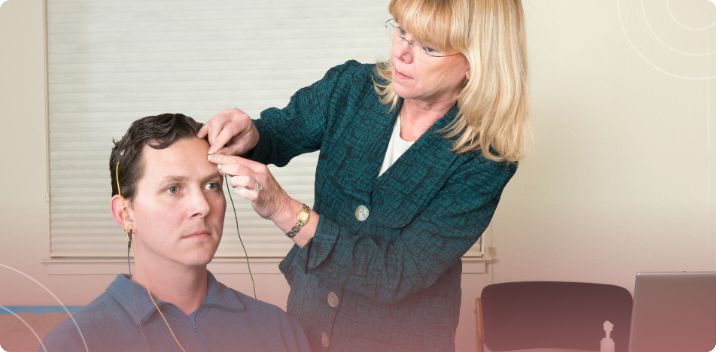
Each neurofeedback session is entirely non-invasive and requires no medication, surgery, or discomfort of any kind. Clients sit comfortably while sensors placed on the scalp monitor brainwave activity across multiple regions simultaneously, and they engage in activities that resemble simple interactive games while receiving real-time feedback about the brain's performance.
As the brain begins integrating the feedback and optimizing its own activity patterns, clients typically begin noticing improvements in cognitive sharpness, emotional steadiness, and physical symptoms within the first several weeks of training. This gentle, reward-based retraining method is what makes the experience comfortable enough to sustain over a full recovery program.
Which post-TBI symptoms can neurofeedback help address?
Neurofeedback is most often used to target three clusters of post-injury symptoms: cognitive, physical, and emotional. Cognitive difficulties including memory loss, concentration problems, and slowed mental processing are among the most common challenges that respond well to targeted training.
Physical symptoms such as persistent headaches, dizziness, light and sound sensitivity, and balance disturbances also tend to improve as the brain's electrical activity normalizes. Emotional dysregulation including anxiety, depression, irritability, and unpredictable mood changes typically stabilizes as training helps restore healthier activity patterns in the brain regions responsible for emotional processing and self-regulation. Many of these are the same lingering concussion symptoms in adults that conventional rest alone fails to resolve.
How does neurofeedback fit with a broader rehabilitation plan?
Neurofeedback training is designed to complement, not replace, the other rehabilitation services that clients may already be receiving. Many clients combine brain training with physical therapy, occupational therapy, speech therapy, or vision rehabilitation to address multiple dimensions of recovery at the same time.
Our team actively coordinates with neurologists, physiatrists, and other healthcare providers to ensure that every aspect of a client's care works in alignment toward the same recovery goals. For clients who live more than an hour away or prefer to continue protocols at home, supervised brain training can extend the same structured approach beyond in-clinic visits, so distance never becomes a barrier to consistent progress.
Why does specialized neurofeedback expertise matter for TBI?
Not every provider has the clinical background or technological sophistication to properly address the complexities of brain injury recovery. TBI cases require specialized protocols that differ substantially from those used for ADHD, anxiety, or other conditions, and applying the wrong approach can produce negligible results or unnecessary setbacks.
Our advanced Neurofeedback 3.0 methodology and comprehensive brain mapping infrastructure ensure that every client receives protocols precisely matched to their individual injury patterns and recovery goals. Whether your injury occurred recently or many years ago, our team has helped clients from across the Los Angeles area, from West LA to Pasadena, work toward regaining cognitive function and quality of life.
Frequently Asked Questions
Is neurofeedback safe after a traumatic brain injury?
Neurofeedback is non-invasive and drug-free. Sensors only read brainwave activity from the scalp, so nothing is sent into the brain and there is no surgery or medication involved. Because protocols are built from your individual qEEG map, training is tailored to your specific injury patterns rather than applied as a generic template.
How long before I notice improvements?
Many clients report early gains in focus, emotional steadiness, or physical symptoms within the first several weeks of training. A standard initial recovery program runs about four months, with progress reviewed throughout so protocols can be adjusted as your brain activity shifts toward more balanced patterns.
Can neurofeedback help years after my injury?
Yes. Persistent symptoms often reflect ongoing electrical dysregulation rather than fixed damage, and the brain retains its capacity to form new connections throughout life. Many clients begin training months or even years after the original injury and still work toward meaningful functional improvements.
Why is a brain map necessary before training starts?
A 3D qEEG brain map shows which regions are overactive, underactive, or poorly connected, even when a CT scan or MRI looks normal. This functional snapshot becomes the blueprint that guides which areas to train and how, so the program targets the actual drivers of your symptoms.
Will neurofeedback interfere with my other therapies?
No. Neurofeedback is meant to work alongside physical therapy, occupational therapy, speech therapy, and other care, not replace them. Our team coordinates with your existing providers so that every part of your recovery plan pulls in the same direction.
Ready to take the next step?
Talk with the Vital Brain Health team about a Neurofeedback plan built around your brain and your goals.