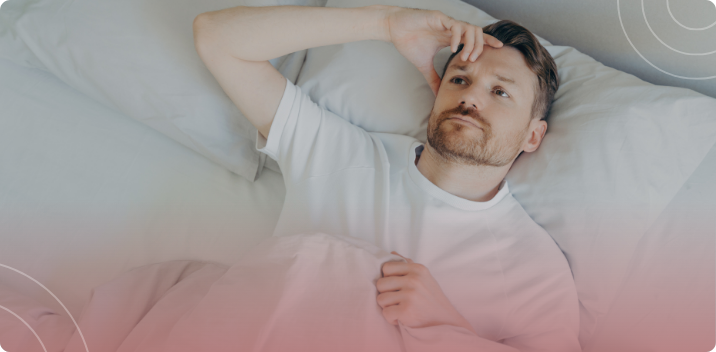
If you are one of the millions of Los Angeles residents struggling with sleep problems, you have likely tried everything. Melatonin, sleep apps, blackout curtains. Maybe you have visited the UCLA Sleep Disorders Center or specialists at Cedars-Sinai. Yet quality sleep remains elusive. Sleep problems often stem from dysregulated brainwave patterns, and neurofeedback for sleep offers a science-backed method to retrain your brain for better rest without medication.
Why Does Your Brain Keep You Awake at Night?
Sleep is an active brain process, not a passive shutdown. Your brain has to shift from fast, alert beta waves during the day into the slower theta and delta rhythms of deep, restorative sleep, and when that transition stalls, you lie awake. Chronic insomnia is not just frustrating, it is linked to higher risks for high blood pressure, heart disease, and metabolic problems.
Think of your brain as a sophisticated 19-room mansion where each room handles different functions. For sleep to occur naturally, these rooms need to communicate effectively, smoothly transitioning from high-alert beta waves into the slower frequencies that characterize deep sleep. During the deepest stage, brain activity settles into a recognizable pattern of slow delta waves that drive the most physically restorative rest of the night.
When this coordination breaks down, sleep problems emerge. Los Angeles residents face unique challenges: traffic stress from the 405 or 101, work pressure in competitive industries, ambient noise and light pollution from West LA to Downtown. Your brain's attention control room stays stuck in high gear, unable to downshift into the slower frequencies needed for quality sleep.
What Does Brain Mapping Reveal About Your Sleep?
Brain mapping reveals the specific brainwave dysregulation behind your sleep struggles, so training is precise rather than generic. We start with comprehensive 3D qEEG brain mapping to see exactly which regions are overactive, which connections are weak, and which frequency bands need retraining. That measured picture is what turns guesswork into a personalized protocol.
This advanced analysis goes beyond the simple colored pictures from basic sleep studies. Our Multi-Layer Analysis examines your brainwave patterns across multiple dimensions to identify the specific dysregulation preventing restful sleep.
We commonly see several patterns. Some Los Angeles professionals show excessive high-beta activity (25 to 30 Hz) persisting into evening hours, creating racing thoughts. This lines up with the hyperarousal model of insomnia, the idea that an over-activated brain keeps the sleep system switched on. Others display poor connectivity between frontal regions and the brain's sleep centers. Still others show irregular sensorimotor rhythm (SMR) activity, the critical 12 to 15 Hz frequency that serves as a gateway to sleep.
How Does Neurofeedback Retrain Your Brain for Better Sleep?
Neurofeedback retrains your brain by giving it real-time rewards whenever it produces a healthier, sleep-ready pattern. Non-invasive sensors read your brainwaves while you watch a video or listen to music, and the system responds (smoother playback, rising volume) the moment your brain hits a calmer frequency, so it gradually learns to repeat that state on its own.
For sleep disorders, we focus on several key patterns. SMR training strengthens the sensorimotor rhythm, teaching your brain to reach the calm, relaxed wakefulness that precedes natural sleep onset. Research on conditioning the 12 to 15 Hz sensorimotor rhythm has linked this kind of training to increased sleep spindle activity and a shorter time to fall asleep. We also work to reduce excessive high-beta activity that keeps the mind racing and to improve communication between frontal regions and the deeper brain structures involved in sleep regulation.
The process is completely non-invasive. Sessions last 30 to 45 minutes in our Pasadena office or through our remote training programs. Most clients need 20 to 40 sessions to see lasting improvements, though many notice better sleep quality within the first few weeks. A published review of neurofeedback research for insomnia notes consistent gains in how people perceive their sleep, while underscoring that protocols and individual responses vary, which is exactly why we map first and tailor each plan.
What Is the Neurofeedback 3.0 Approach?
Neurofeedback 3.0 is our integrated, multi-modal training method that combines several layers of analysis instead of relying on one generic protocol. We blend AI-based analysis, network connectivity assessment, normative database comparisons, and symptom tracking to build a complete, individualized picture of your brain.
From there, we select from over 20 different neurofeedback techniques to design protocols specifically for your sleep challenges. Our team, guided by PhD scientific advisors, stays current with the latest neuroscience research so your training reflects how the field is actually evolving. Where it fits a client's pattern, we may pair brainwave training with biofeedback for calming the nervous system, addressing the physical arousal (rapid breathing, muscle tension) that often travels alongside a racing mind at bedtime.
How Does Neurofeedback Fit a Busy Los Angeles Lifestyle?
Neurofeedback fits a packed Los Angeles schedule because it is flexible: in-office, hybrid, or fully remote, with sessions short enough to slot into a real week. You do not have to choose between consistent training and a demanding job or a long commute.
Many clients work in high-stress industries like entertainment, technology, finance, or healthcare where long hours become normalized. Others face lengthy commutes that eat into sleep time, and insufficient sleep itself raises the risk of serious chronic conditions over time. Our Pasadena office provides convenient access throughout the San Gabriel Valley, while families in Santa Monica, Beverly Hills, or West Los Angeles can use our hybrid training options. For those living an hour or more away, we offer remote neurofeedback programs that deliver research-grade results without traffic stress.
What Other Conditions Improve Alongside Sleep?
Better sleep rarely shows up alone, because the brain patterns that disrupt rest often drive other symptoms too. Training that calms an over-aroused brain tends to help the related condition and the sleep problem at the same time, which is why our work on insomnia relief in Los Angeles so often overlaps with other goals.
Anxiety frequently manifests as nighttime rumination and hyperarousal. Low mood often comes paired with sleep disturbances. ADHD involves difficulty transitioning to sleep because the brain struggles to downregulate. Trauma-related hyperarousal, which we see in veterans receiving care through the VA West Los Angeles Medical Center and in first responders, commonly includes severe sleep disruption. Neurofeedback training can address both the primary concern and the sleep problem together rather than treating them in isolation.
What Should You Expect From Sleep Training?
Successful sleep training tends to produce relief that holds, because the brain is forming new habits through neuroplasticity rather than depending on a nightly pill. The gains are cumulative, so each session builds on the last to make healthy sleep patterns stronger and more automatic over time.
Some Los Angeles clients notice improved sleep quality within four to six sessions. Others experience gradual improvements over 15 to 20 sessions as their brain learns new patterns. Because deep sleep depends on the brain progressively slowing into its restorative rhythms, the goal is to make that downshift easier and more reliable night after night.
We monitor progress through sleep logs, standardized assessments, and follow-up brain mapping to objectively track improvements. This data-driven approach lets us adjust protocols as needed and confirm that measurable brain changes line up with the better sleep you are actually experiencing.
Frequently Asked Questions
Is neurofeedback for sleep safe and non-invasive?
Yes. Neurofeedback uses surface sensors that only read your brain's electrical activity; nothing is sent into the brain and no medication is involved. You simply relax while watching or listening to feedback. Most people find sessions calming and report no meaningful downside beyond occasional tiredness after early sessions.
How many sessions will I need to sleep better?
Most clients complete 20 to 40 sessions for lasting change, though some notice better sleep within the first four to six. The exact number depends on what your brain mapping reveals and how your patterns respond, which is why we track progress and adjust the plan as you go.
Will the results last after I stop training?
Often, yes. Because neurofeedback works through neuroplasticity, the brain learns and retains the healthier patterns rather than relying on a nightly aid. Many clients keep their gains long after finishing, and follow-up brain mapping helps confirm those changes are holding.
Can I do neurofeedback if I do not live near Pasadena?
Absolutely. We offer remote training programs designed for people outside the immediate area or those who simply cannot fit traffic into their schedule. These programs deliver research-grade protocols at home, so distance does not have to stand between you and better sleep.
How is qEEG brain mapping different from a regular sleep study?
A traditional sleep study mostly measures what happens while you sleep, while qEEG brain mapping shows how your brain regulates itself across many frequency bands during waking hours. That detail reveals the specific dysregulation behind your sleep trouble and lets us design a precise, personalized training protocol.
If you are ready to explore a science-backed, medication-free approach, neurofeedback training offers a pathway to lasting improvement. We invite Los Angeles area residents experiencing sleep problems to begin with an initial consultation and 3D qEEG brain mapping session that reveals exactly what is happening in your brain. Whether you visit our Pasadena office or join a remote program, quality sleep is not a luxury, it is a fundamental requirement for brain health, physical health, and clear daily function, and your brain can be trained back toward it.
Ready to take the next step?
Talk with the Vital Brain Health team about a Neurofeedback plan built around your brain and your goals.