If you have been struggling with anxiety, low mood, ADHD, sleep problems, or chronic stress, you may feel frustrated by treatments that only mask symptoms rather than addressing the underlying patterns in your brain. You might notice persistent difficulty with focus and concentration, emotional reactions that feel disproportionate to the situation, racing thoughts that keep you awake at night, or the exhausting cycle of trying multiple medications without finding lasting relief.
Neurofeedback therapy offers a medication-free pathway that helps you learn to regulate the brain patterns associated with these challenges, giving you a science-backed option worth exploring. Our Los Angeles team has built extensive experience supporting individuals and families seeking to optimize brain function through advanced neurofeedback training that is tailored to each person's brain map.
How Does Brain Function Affect Your Daily Life?
Brain function shapes nearly every part of daily life, from how well you focus to how calmly you handle stress, and challenges show up differently from person to person. Some people experience obvious anxiety or hyperactivity, while others mainly struggle with low energy, brain fog, and difficulty staying motivated, all of which can trace back to how the brain self-regulates.
Common signs include forgetting important information moments after learning it, feeling overwhelmed by everyday tasks that used to feel manageable, experiencing mood swings that seem to come out of nowhere, struggling to fall asleep or stay asleep through the night, and finding it difficult to concentrate even when you want to focus.
These patterns can be easy to dismiss as personal failings or character flaws, but when they persist across multiple areas of your life and interfere with work performance, relationships, or overall well-being, they may reflect underlying neurological patterns that deserve clinical attention.
The Neurological Basis of Brain Health Challenges
Research has established that conditions like anxiety, depression, ADHD, and insomnia involve measurable differences in brainwave activity across regions responsible for attention regulation, emotional processing, and executive function. People with ADHD commonly display elevated slow-wave activity, particularly theta waves, in the frontal and central cortical regions that govern sustained attention and response inhibition, a pattern documented in peer-reviewed research on neurofeedback for attention regulation. Those with anxiety often show excessive high-frequency beta activity in areas associated with worry and rumination.
Low mood frequently involves reduced activity in the left prefrontal cortex, which affects motivation and positive emotion, an observation reflected in studies of prefrontal EEG asymmetry and depressed states. For families navigating focus and behavior concerns, understanding these signatures is often the first step, and our overview of neurofeedback for ADHD in children explains how these patterns translate into a personalized plan.
Reduced connectivity between the prefrontal cortex and deeper subcortical structures also contributes to the difficulty people experience when trying to regulate emotions, manage stress, and maintain consistent energy levels. These are not signs of weakness or lack of willpower. They are measurable patterns in brain function that can be identified through advanced brain mapping and addressed through targeted training.
How Does Neurofeedback Address Brain Function?
Neurofeedback is a safe, non-invasive approach that translates your brainwave patterns into immediate visual and auditory feedback, teaching the brain to settle into more balanced, well-regulated states on its own. Picture the brain as a sophisticated network of interconnected regions, where each area handles a distinct cognitive or emotional function.
The attention center manages sustained focus and task engagement, the emotional regulation hub moderates your responses to stress, the executive control network handles planning and decision making, and communication pathways link all of these systems together for coordinated function.
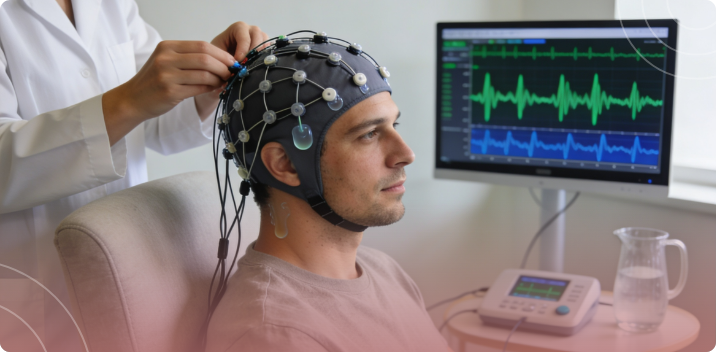
During sessions, small sensors are placed on your scalp to measure electrical brain activity through electroencephalography, or EEG. As Cleveland Clinic explains, an EEG records the electrical signals that pass between brain cells through electrodes resting on the scalp. These sensors function as listeners only. They transmit nothing into the brain and simply monitor existing activity, which is why the painless way an EEG measures brain electrical activity makes it well suited to feedback training.
While you watch videos or engage with games, optimal brainwave patterns produce smooth playback and clear display. Less regulated brain states trigger slowed playback or slightly dimmed visuals. This real-time feedback teaches you to recognize and gradually influence your own brain activity patterns without any medication involved.
Neurofeedback 3.0
Our clinic has developed Neurofeedback 3.0, an advanced multi-modal training system that integrates AI-powered analysis, network connectivity evaluation, and symptom monitoring. The approach draws from over 20 distinct neurofeedback methodologies to create individualized protocols tailored to your unique brain map. For people dealing with anxiety, low mood, attention challenges, or sleep disorders, this means targeting the specific regions and connectivity patterns that contribute to your symptoms rather than applying a generalized protocol to every client.
What Can Clients Expect From Neurofeedback?
Most clients can expect a gradual, personalized process that starts with a brain map and builds toward steadier focus, calmer reactions, and better sleep over a series of sessions. Clinical research indicates neurofeedback may help reduce symptoms associated with various brain health and cognitive challenges, though outcomes differ by individual.
Studies document improvements across sustained attention, emotional regulation, sleep quality, stress resilience, cognitive performance, and overall quality of life. Because so many of these gains depend on restorative rest, it helps to understand how the brain cycles through distinct stages during healthy sleep. At our Los Angeles facility, the standard starting point involves a program targeting the specific brain regions and connectivity patterns identified in your initial brain map.
Clients generally observe initial subtle shifts within the opening sessions. Early indicators might include falling asleep more easily at night, feeling less reactive during stressful situations, completing work tasks with better focus, experiencing improved energy levels throughout the day, or noticing a greater sense of emotional balance during challenging moments.
The visual feedback system helps brain networks establish communication through more balanced frequency patterns, creating strengthened neural pathways that produce enduring effects. Successful outcomes deliver sustained improvements over extended timeframes, and many clients describe benefits that continue well beyond the initial training period, in part because neurofeedback is built around teaching durable self-regulation skills rather than supplying a temporary fix.
A Collaborative Approach to Care
This approach integrates seamlessly with existing therapeutic and medical resources. Our team collaborates with your therapist, psychologist, psychiatrist, primary care physician, and other support professionals to optimize results across every environment where symptoms create challenges. Neurofeedback does not replace psychotherapy, medication management, or other interventions. It complements them by directly addressing the underlying brainwave patterns that drive symptoms while other providers address behavioral and cognitive components.
Training Sessions and Scheduling Options
The advanced methods we employ require briefer sessions compared to older training techniques, delivering maximum clinical impact in less time. Standard Neurofeedback 3.0 sessions run 15 to 30 minutes. In the office setting, clients relax in zero-gravity chairs while their brainwave activity controls the clarity of favorite programs displayed on 70-inch screens. Most adults adapt readily to the process because the training feels effortless and engaging rather than demanding or exhausting. If you want a closer look at how the on-site sessions feel, our brain training program in Los Angeles walks through the full in-office experience.
Can You Do Neurofeedback Remotely?
Yes, neurofeedback can be done remotely, and remote training programs allow clients to access support from anywhere in the country, removing the geographic barrier that would otherwise prevent consistent participation. Currently, nearly half of all clients participate through home-based remote neurofeedback programs, and that percentage continues to grow.
For those living an hour or more from the Los Angeles office, hybrid arrangements including home-based training are available so that regular sessions remain accessible regardless of location. Remote participants follow the same individualized protocols built from their brain map, with guidance and monitoring provided throughout each phase of training.
Is Neurofeedback Right for You?
Neurofeedback is often a strong fit if you have persistent symptoms that interfere with daily functioning and you prefer to explore non-pharmaceutical options or enhance the effectiveness of treatments you already use. It is also worth considering if medication alone has not produced the improvements you were hoping for.
Consider training if you can commit to a consistent schedule, or if you are seeking an approach that builds lasting self-regulation skills rather than relying on daily interventions indefinitely. The best way to know for certain is a brain map that shows how your specific networks function under real-world conditions.
Begin Your Journey
People in the Los Angeles area and beyond who are considering neurofeedback can schedule an initial appointment today. This first visit includes a thorough intake evaluation and 3D qEEG brain mapping to create your personalized brain map, providing a detailed clinical blueprint showing how different brain regions function and interact under real-world conditions.
Each client receives recognition as a unique individual with distinct experiences, obstacles, and goals. The practice employs scientifically validated methods and maintains a team of PhD scientific advisors ensuring the highest quality, evidence-based support at every stage of care. Neurofeedback equips you with self-regulation skills that serve you throughout your personal and professional life, building the neurological foundation needed for improved focus, better emotional balance, and greater confidence in your own capabilities.
Frequently Asked Questions
Is neurofeedback safe and does it hurt?
Neurofeedback is non-invasive and painless. Small sensors rest on the scalp to listen to your existing brain activity, and nothing is ever sent into the brain. Most people find sessions relaxing, since the training simply involves watching videos or engaging with games while your brainwaves guide the feedback.
How many sessions will I need to see results?
Many clients notice subtle early shifts within the first several sessions, such as easier sleep or calmer reactions to stress. Lasting change typically builds over a longer course of training tailored to your brain map. Your specific plan and timeline are shaped by your initial evaluation and how your networks respond.
Can neurofeedback replace my medication or therapy?
No. Neurofeedback is designed to complement existing care, not replace it. It works alongside your therapist, psychiatrist, or primary care provider by targeting the underlying brainwave patterns, while those professionals continue to address the behavioral and medical sides of your care.
What conditions can neurofeedback help with?
Research suggests neurofeedback may support people facing attention challenges, anxiety, low mood, sleep difficulties, and stress-related concerns, though results vary by individual. Because each protocol is built from your own brain map, training focuses on the specific regions and connectivity patterns linked to your symptoms.
Do I have to travel to Los Angeles for neurofeedback?
Not necessarily. While in-office sessions take place in Los Angeles, remote and hybrid programs let clients train from home anywhere in the country. Remote participants follow the same personalized protocols and receive ongoing guidance, making consistent training possible regardless of distance.
Ready to take the next step?
Talk with the Vital Brain Health team about a Neurofeedback plan built around your brain and your goals.