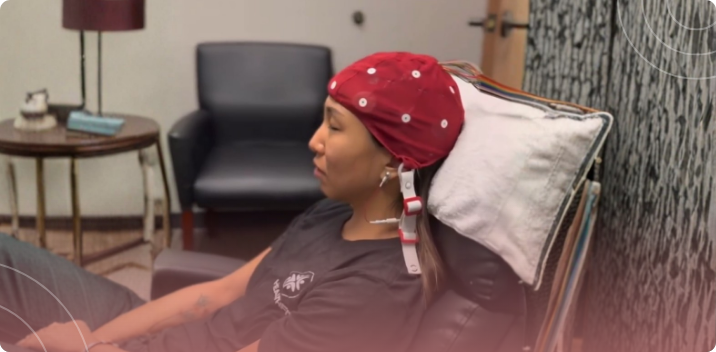
We help patients retrain their brains through targeted neurofeedback sessions designed to bring balance and relief to daily life. Many of our Pasadena clients find meaningful improvement in focus, emotional regulation, and overall clarity. However, some reach a point where progress seems to stop. When symptoms persist despite consistent training, the answer often lies not in the brain itself, but in the body supporting it. Understanding why this happens is the difference between a plateau and a breakthrough.
Why does neurofeedback progress sometimes stall?
Neurofeedback progress most often stalls because the body is not in a state that allows the brain to learn. When inflammation runs high or blood sugar swings wildly, the brain stays focused on survival instead of forming new neural pathways. Addressing those underlying conditions first usually restarts progress.
This is rarely about effort or motivation. Your brain operates within a complex chemical environment, and that environment determines whether lasting change can actually take root. We think of it as the metabolic pre-condition: the physiological state of your body at the cellular level. Picture your brain as sophisticated machinery that needs clean fuel and stable power to perform. When the power supply is unstable, even the best brain training protocol struggles to hold.
How does biology come before behavior?
The brain's primary job is survival. Before it can focus on learning new patterns or regulating emotions, it must confirm the body is safe. When your system detects threats like chronic inflammation, unstable glucose, or persistent stress hormones, the brain stays locked in protection mode. Behavior change waits until biology gives the green light.
During our qEEG brain mapping sessions across the San Gabriel Valley, we capture the electrical patterns of your current brain state. These maps show us what is happening in real time. But when your internal chemistry is imbalanced, those electrical signals reflect that chaos. Trying to retrain a brain operating in this state is like building a house on shifting ground. The structure simply will not hold. This is also why integrative practitioners increasingly look at whole-person health rather than isolated symptoms, considering the many factors that promote either health or dysfunction.
What role does inflammation play in stalled training?
Inflammation creates static in the nervous system. When inflammatory markers stay elevated, glial cells throughout the brain activate and generate background noise that drowns out the subtle feedback signals used during training. The brain becomes too busy responding to a perceived emergency to notice the gentle cues that drive learning.
Neurofeedback excels at calming anxious thought patterns and teaching the nervous system how to rest. Yet sources of inflammation are everywhere. Common culprits include processed foods, unmanaged stress, poor sleep quality, and environmental exposures common throughout Southern California. The Cleveland Clinic notes that chronic inflammation is involved in the disease process of many conditions, including neurodegenerative ones, because the body keeps sending inflammatory cells even when there is no real danger.
To make real progress in your Pasadena neurofeedback journey, we work to quiet that inflammatory response first. Only when the brain feels safe can it direct energy toward growth and adaptation instead of defense.
How does sleep and metabolism affect your results?
Sleep and stable metabolism are the quiet engine behind every successful training session. When you sleep well and keep blood sugar steady, the brain has the resources it needs to consolidate new patterns. When either falls apart, the static returns and the gains slip away.
Quality sleep is not a luxury here. The CDC reports that adequate sleep helps you improve attention and memory to better perform daily activities, which are exactly the capacities we are trying to strengthen during sessions. Unstable glucose adds another layer of interference, because the brain cannot maintain stable focus when its fuel supply keeps spiking and crashing. This is why we examine sleep, nutrition, and stress alongside your brain maps rather than treating them as separate issues.
How do we unlock your brain's true capacity?
Training at our clinic is not about fixing something broken. We work to reveal potential that already exists within you but stays hidden beneath metabolic interference. When we address the pre-conditions that support brain health, each session becomes more effective, and the changes shift from temporary relief to lasting transformation that carries into every part of life.
Understanding your unique metabolic landscape is essential for maximizing results. We reject cookie-cutter approaches in favor of personalized, data-driven care that honors your individual biology. Your nervous system coordinates emotion, thought, and behavior at once, and as the NICHD explains, the nervous system regulates these vital functions through deeply interconnected networks. Respecting that complexity is what makes the work durable.
Begin with brain mapping
Your journey starts with a comprehensive quantitative EEG assessment. This painless evaluation shows us precisely how your brain functions right now. Armed with that information, we design a protocol tailored to your specific neurological patterns and metabolic needs. If you want to understand exactly what that scan reveals, our 3D brain mapping in Los Angeles is the clearest starting point.
Explore your metabolic health
During your consultation at our Pasadena office, we examine the lifestyle and biological factors influencing your results. We consider sleep quality, nutritional habits, stress levels, and inflammatory markers. This complete picture lets us identify what might be blocking your progress and how to remove those obstacles.
Train with optimal support
Once we have optimized your internal environment, training becomes significantly more effective. Whether you are seeking help for a child struggling with ADHD or managing your own stress and focus challenges, our comprehensive approach gives you the best chance for meaningful, lasting improvement.

Take control of your brain wellness
Your brain has a remarkable capacity for positive change when given proper support. Hidden inflammation and metabolic dysfunction do not have to limit your potential. The growing body of research on ADHD, for example, points to brain structure and activity as central, and the NIMH highlights neurofeedback among emerging approaches worth understanding alongside established care.
The difference between temporary relief and lasting transformation often comes down to addressing what lies beneath the surface. When we treat the whole system rather than isolated symptoms, real progress becomes possible. Joining the growing number of Pasadena residents discovering renewed clarity, calm, and confidence starts with looking past the brain alone and tending to the body that powers it.
Frequently Asked Questions
Why has my neurofeedback progress suddenly plateaued?
A plateau usually signals that something in the body is interfering with the brain's ability to learn. Hidden inflammation, poor sleep, or unstable blood sugar can keep the nervous system in protection mode. Once we identify and quiet those factors, training typically becomes productive again.
Can inflammation really affect how well neurofeedback works?
Yes. When inflammatory markers stay elevated, glial cells create background noise that drowns out the subtle feedback signals used during sessions. The brain becomes too occupied with a perceived emergency to notice the cues that drive change. Reducing that inflammation first tends to improve outcomes.
Do I need brain mapping before starting?
Brain mapping is the clearest way to see how your brain functions right now. A quantitative EEG assessment is painless and gives us the data to design a protocol around your specific patterns rather than a generic template. It also helps us measure progress over time.
How does sleep impact my training results?
Sleep is when the brain consolidates new patterns and clears metabolic byproducts. Poor sleep undercuts the gains made during sessions and returns the system to a noisy, reactive state. Improving sleep quality is one of the most reliable ways to support steady progress.
Is this approach suitable for a child with ADHD?
Our comprehensive approach is designed to support both children and adults. For a child navigating focus and regulation challenges, we look at sleep, nutrition, and stress alongside brain patterns so training has the strongest possible foundation. Care is always tailored to the individual.
Ready to take the next step?
Talk with the Vital Brain Health team about a Neurofeedback plan built around your brain and your goals.